Picture this: it's Sunday afternoon, the kind of day where the air outside is crisp but your kitchen windows are fogged up with steam and anticipation. You're standing over a pot of bubbling tomato sauce, the kind that splatters just enough to remind you that real cooking is happening here, not some sanitized cooking-show version. Suddenly, you pull out these gorgeous bundles of beef, tied up like little presents with kitchen string, and the smell hits you — garlic, herbs, cheese, and that deep, beefy aroma that makes your stomach growl even though you just ate lunch. That was me three weeks ago, and let me tell you, I've been chasing that high ever since.
Braciole isn't just another Italian-American dish your nonna might have made — it's the ultimate Sunday supper, the kind of meal that demands you slow down, pour yourself a glass of wine, and accept that dinner won't be ready for another three hours. And here's the thing about braciole: most recipes get it completely wrong. They rush it, they skimp on the sauce, they use the wrong cut of meat, and they wonder why their guests are politely chewing through shoe leather while nodding approvingly. I know this because I've been that person, proudly serving what I thought was authentic braciole only to watch my husband sneak to the kitchen for crackers an hour later.
But this version? This is the one that had my neighbor knocking on my door asking what I was cooking, the one that made my teenage son abandon his video games to hover around the stove, the one that had me sneaking cold leftovers at midnight like a culinary thief in my own kitchen. The sauce is so rich and complex that you'll want to bottle it and sell it, and the meat becomes fork-tender while somehow maintaining its structural integrity — no more unraveling bundles of disappointment. I dare you to taste this and not go back for seconds, thirds, and maybe even fourths if you think nobody's watching.
The secret isn't some impossible-to-find ingredient or a gadget you need to order from Italy. It's about understanding that great braciole is all about patience, layering flavors, and treating each component with the respect it deserves. We're talking about properly pounding the meat so it cooks evenly, creating a filling that actually stays put instead of bleeding out into the sauce, and building a tomato gravy that could make a grown man weep. Ready for the game-changer? We're using a technique that locks in moisture so effectively that even if you accidentally overcook it by twenty minutes, it'll still be the most tender braciole you've ever served. Let me walk you through every single step — by the end, you'll wonder how you ever made it any other way.
What Makes This Version Stand Out
Butter-Tender Beef: Most recipes tell you to use top round and cook it until it's leather. We're using flank steak that's been pounded thin and rolled properly, then simmered low and slow until you can cut it with a spoon. The result is meat that melts like butter but still holds together when you slice it, creating those perfect pinwheel servings that make everyone think you're a kitchen wizard.
Sauce That Tastes Like Nonna's Secret: This isn't your average marinara from a jar. We're building layers of flavor with a soffritto base, deglazing with wine, and letting it simmer until it reaches that perfect consistency that coats your pasta like velvet. The braciole actually cooks in the sauce, infusing it with beefy richness that makes you want to drink it straight from the pot when nobody's looking.
Filling That Actually Stays Inside: Nothing's more tragic than cutting into your braciole and watching all the good stuff tumble out. Our filling binds together with egg and breadcrumbs, seasoned aggressively so it flavors the meat from the inside out. Each slice reveals this gorgeous spiral of herbs, cheese, and garlic that looks like it belongs on a magazine cover.
Make-Ahead Magic: Here's where this recipe becomes your dinner party secret weapon — you can assemble these beauties up to two days ahead, then just pop them in the sauce when you're ready. They actually taste better after an overnight rest in the fridge, and your future self will thank you when you're not frantically rolling meat at 9 AM on Sunday morning.
Leftovers That Fight Back: Most leftover roasts dry out faster than a desert creek bed, but braciole actually improves with age. The flavors meld together, the sauce penetrates deeper, and you end up with something that might be even better than the original meal. I'll be honest — I ate half the batch before anyone else got to try it, standing in front of the fridge like a sandwich thief.
Crowd-Pleasing Presentation: There's something about slicing into those perfect spirals that makes everyone ooh and ahh like you're unveiling a masterpiece. Even the pickiest eaters can't resist the combination of tender beef, savory filling, and that incredible sauce. Picture yourself pulling this out of the oven, the whole kitchen smelling like an Italian grandmother's wildest dreams.
Technique That Works Every Time: Once you understand the method — the pounding, the rolling, the tying, the simmering — you'll never mess this up again. It's like learning to ride a bike, except instead of skinned knees, you get restaurant-quality braciole that'll have your family proposing marriage all over again.
Inside the Ingredient List
The Flavor Base
Flank steak is our hero here, and before you argue about using a more expensive cut, let me explain why this works better than the traditional top round. Flank has these beautiful long muscle fibers that, when sliced against the grain after cooking, create the most tender bite you've ever experienced. It's got enough fat marbling to stay juicy during the long simmer, but it's lean enough to take on all the flavors we're throwing at it. When you're selecting your flank steak at the butcher counter, look for one that's about 1 1/2 pounds and has a nice, even thickness throughout — this makes pounding and rolling so much easier.
Pine nuts might seem like an unnecessary luxury, but they're the backbone of our filling's texture. When toasted and ground with the other filling ingredients, they release these oils that act like nature's glue, holding everything together while adding this subtle nuttiness that makes people ask "what is that amazing flavor?" If pine nuts aren't in your budget, you can substitute with toasted walnuts, but trust me on this one — the pine nuts are worth the splurge. Toast them gently in a dry pan until they smell like you're walking through a Mediterranean forest.
The Texture Crew
Fresh breadcrumbs are non-negotiable in this recipe, and if you're reaching for that canister of sawdust from the grocery store, we're going to have words. Take some day-old Italian bread, tear it into chunks, and pulse it in your food processor until you have fluffy, irregular crumbs. These fresh breadcrumbs act like tiny sponges, soaking up all the juices from the meat and the sauce, creating these little pockets of flavor that keep the filling moist and prevent it from turning into a dry, crumbly mess.
Parmigiano-Reggiano cheese brings that umami bomb that makes people close their eyes when they take a bite. Don't you dare use the pre-grated stuff from a green can — we're building flavors here, not tearing them down. Buy a nice wedge and grate it yourself, and you'll be rewarded with cheese that actually melts into the filling instead of just sitting there like stubborn little pellets. The real stuff has these crystals that provide little bursts of salty, nutty flavor that make each bite interesting.
The Unexpected Star
Golden raisins might make you scratch your head, but stay with me here — this is pure magic. A small handful of these little gems chopped up and mixed into the filling provides these tiny pockets of sweetness that balance out all the savory elements. It's not enough to make the dish sweet, just enough to make people wonder why this braciole tastes so much more complex than any other version they've tried. The trick is to chop them fine so they distribute evenly throughout the filling.
Lemon zest is another sleeper hit that most recipes completely ignore. Just a whisper of fresh lemon zest brightens up all those heavy, rich flavors and makes the herbs taste more alive. It's like turning on a light in a dim room — suddenly everything pops. Use a microplane and only grate the yellow part, not the bitter white pith underneath.
The Final Flourish
Flat-leaf parsley isn't just there for color, though it does make those cross-sections look gorgeous. It has this clean, slightly peppery flavor that cuts through all the richness and makes you want to keep eating. Chop it just before you mix the filling so it stays bright and fresh, and don't be shy with it — we're using a whole cup of leaves, not the sad little sprinkle most recipes call for.
The tomato sauce deserves its own paragraph because it's not just a cooking medium — it's the supporting actor that might steal the whole show. We start with crushed San Marzano tomatoes because they have this perfect balance of sweetness and acidity that makes your mouth water just thinking about it. Add in a soffritto of onion, carrot, and celery, let it cook down until it's jammy and sweet, then hit it with some red wine to deglaze all those beautiful brown bits from searing the braciole. This sauce simmers for hours, concentrating down until it's thick enough to coat pasta but still loose enough to be spooned over everything on your plate.
The Method — Step by Step
Lay your flank steak on a large cutting board and cover it with plastic wrap. Now here's where you channel any frustration from your week — pound that meat with a meat mallet until it's about 1/4-inch thick all over. You want it thin enough to roll easily but not so thin that it develops holes. The plastic wrap prevents tearing and contains the mess, plus you can see exactly how thin you're getting it. Take your time here — this step determines whether your braciole will cook evenly or end up with tough, chewy spots that ruin the whole experience.
Season the pounded steak aggressively with salt and pepper on both sides. I'm talking more salt than you think you need — remember, this is a thick piece of meat that needs to be seasoned through. The salt helps break down the proteins, making the meat more tender, while the pepper adds that background heat that makes everything else taste more alive. Don't be shy here — under-seasoned meat is the difference between restaurant-quality and "why does this taste like hospital food?"
Make the filling by combining the breadcrumbs, grated cheese, toasted pine nuts, minced garlic, chopped parsley, golden raisins, lemon zest, and a beaten egg in a bowl. Mix it with your hands — yes, your hands — until it comes together like a rough paste. The egg is crucial here because it acts as the binder that keeps everything together during the long cooking process. Taste it now and adjust the salt — it should be highly seasoned because it's going to flavor the entire roll of meat. If you've ever struggled with filling that falls out when you slice the braciole, you're not alone — and I've got the fix right here in your hands.
Spread the filling evenly over the pounded steak, leaving a 1-inch border around the edges. This border is crucial — it's what prevents the filling from oozing out when you roll it up. Press the filling down gently so it adheres to the meat, but don't pack it in too tightly or the roll will be dense and heavy. Think of it like you're tucking the meat into bed with a nice, even blanket of flavor.
Roll up the steak jelly-roll style, starting from the long edge and rolling away from you. Keep it tight but not so tight that the filling squeezes out. When you get to the end, tuck the edge underneath to seal it. This is the moment of truth — a poorly rolled braciole will unravel in the sauce, turning your beautiful meal into something that looks like it lost a fight with a blender.
Tie the roll every 2 inches with kitchen string, making sure each tie is secure but not so tight that it cuts through the meat. The string keeps everything together during the long simmer, but it also creates those gorgeous indentations that make each slice look professional. Okay, ready for the game-changer? We're going to sear the whole roll in a hot pan until it's deeply browned on all sides. That sizzle when it hits the pan? Absolute perfection. This step creates the fond that flavors our sauce and gives the meat that beautiful crust that locks in all the juices.
Remove the seared braciole and set it aside while you build the sauce. In the same pan, sauté the onion, carrot, and celery until they're soft and starting to caramelize. The vegetables will pick up all those browned bits from the meat, creating the foundation of flavor that makes this sauce unforgettable. Add the garlic and cook for another minute until it smells incredible, then hit it with the red wine to deglaze the pan, scraping up every last bit of fond.
Add the crushed tomatoes, bay leaves, and a big pinch of salt, then nestle the braciole back into the sauce. The sauce should come about halfway up the sides of the meat — we want to braise it, not drown it. Bring it to a gentle simmer, then cover and let it cook for 2 1/2 to 3 hours, turning the braciole every 45 minutes so it cooks evenly. Your house will start to smell like you've been transported to a little trattoria in Naples, and neighbors may start showing up with empty plates and hopeful expressions.
After the long simmer, remove the braciole from the sauce and let it rest for 15 minutes before slicing. This rest is crucial — it allows the juices to redistribute throughout the meat, so when you cut into it, you don't lose all the moisture onto the cutting board. The sauce should have thickened considerably. If it's too thick, add a splash of water. If it's too thin, let it simmer uncovered while the meat rests. Taste and adjust the seasoning — it might need more salt, a pinch of sugar if the tomatoes are too acidic, or a pat of butter to round out the flavors.
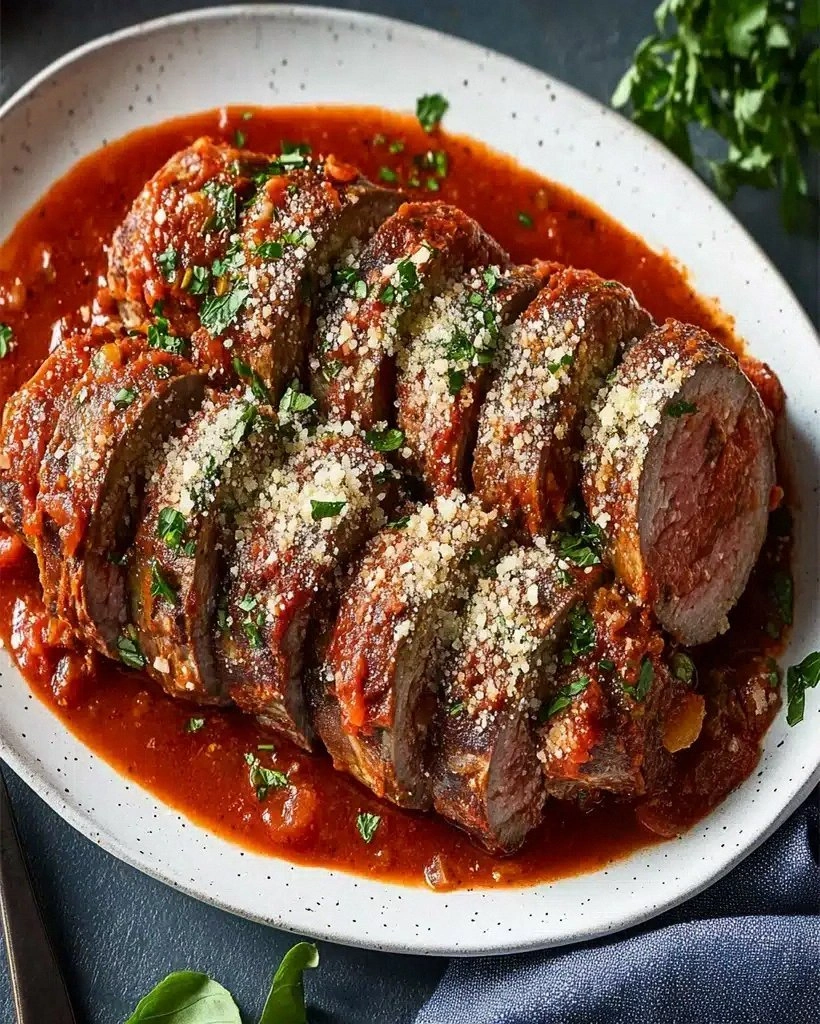
Slice the braciole into thick rounds, removing the string as you go. Each slice should reveal that beautiful spiral of filling, with the meat tender enough to cut with a fork. Serve it over pasta with the sauce spooned over the top, or go traditional and serve it as a second course with crusty bread to mop up every last drop of that incredible sauce. And now the fun part — watch people's faces when they take their first bite. That moment when their eyes close and they make that little involuntary sound of pleasure? That's when you know you've nailed it.
That's it — you did it. But hold on, I've got a few more tricks that'll take this to another level...
Insider Tricks for Flawless Results
The Temperature Rule Nobody Follows
Here's the thing about braising that most recipes gloss over — the liquid should never come to a rolling boil. We're looking for the gentlest of simmers, just a few lazy bubbles breaking the surface every few seconds. Too hot and the meat contracts violently, squeezing out all its juices and turning tough. Too cool and you're just giving bacteria a spa day. The perfect temperature is around 180°F, which on most stoves means the lowest possible setting on your smallest burner. If you see the sauce bubbling vigorously, crack the lid slightly to let some heat escape, or move it to an even smaller burner. A friend tried skipping this step once — let's just say it didn't end well, and she ended up serving something that resembled beef-flavored rubber bands in tomato soup.
Why Your Nose Knows Best
Forget timers — your nose is the best kitchen timer you have. When the braciole is perfectly cooked, your kitchen will smell like an Italian grandmother's house on Sunday afternoon. Before that point, you'll still smell raw tomato acidity and harsh garlic. After that point, the smell becomes deeper, more rounded, with the sweet scent of long-cooked tomatoes and the rich aroma of braised beef. When you walk into your house and immediately feel like you need to cook pasta, that's when you know it's done. This usually happens around the 2 1/2 hour mark, but every stove and every piece of meat is different, so trust your senses over the clock.
The 5-Minute Rest That Changes Everything
After you remove the braciole from the sauce, let it rest on a cutting board tented loosely with foil for at least 15 minutes. I know you're hungry, I know it smells incredible, and I know your family is circling like vultures, but this rest is what separates good braciole from legendary braciole. During this time, the fibers relax and reabsorb some of the juices that were forced to the surface during cooking. Cut into it too early and all those beautiful juices will run out onto the board, leaving you with dry meat and a puddle of wasted flavor. Use this time to cook your pasta, warm some bread, or just pour yourself another glass of wine and bask in the anticipation of what's about to happen.
The String Theory of Perfect Slices
Here's a professional trick that'll make your braciole look like it came from a restaurant kitchen: don't remove all the string before slicing. Cut through the strings at the same time as the meat, leaving a small piece of string on each slice. This keeps the spiral intact and prevents the filling from falling out when you transfer the slices to plates. The string is edible (it's just cotton), but you can easily slip it off each slice as you eat. This next part? Pure magic — if you really want to impress, remove the strings entirely before serving on a platter, but keep the slices arranged in their original shape so guests can see the spiral pattern.
Creative Twists and Variations
This recipe is a playground. Here are some of my favorite ways to switch things up:
The Spicy Southern Italian
Add a teaspoon of crushed red pepper flakes to the filling and swap the golden raisins for chopped Calabrian chilies. The heat from the chilies permeates the meat during the long cooking, creating this beautiful slow burn that builds as you eat. Use spicy Italian sausage instead of the pine nuts for an extra protein punch. This version pairs perfectly with a big, bold red wine and is guaranteed to clear your sinuses while making you reach for more.
The Vegetarian Imposter
Okay, hear me out — you can make a vegetarian version using large portobello mushroom caps instead of beef. Roast the caps first to concentrate their flavor, then fill and roll them just like the meat version. The key is to really brown them well and use a mushroom-based vegetable stock instead of water in the sauce. It's not the same as the original, but it's surprisingly satisfying and will make your vegetarian friends feel like they're part of the feast instead of getting the sad pasta primavera treatment.
The Holiday Showstopper
For Christmas or Easter, add some luxury ingredients to the filling: chopped prosciutto, fresh mozzarella cubes, and a handful of chopped black olives. The prosciutto melts into the meat, adding incredible umami, while the mozzarella creates these little pockets of gooey cheese throughout. Serve it with a side of creamy polenta instead of pasta for a meal that tastes like a celebration in every bite. Your relatives will start requesting this instead of the traditional roast.
The Weeknight Shortcut
When you want braciole flavor but don't have three hours, use thin-cut pork chops pounded even thinner. They cook in about 45 minutes and absorb flavors faster than beef. Keep everything else the same, just reduce the sauce by about a third before you start so it thickens properly in the shorter cooking time. It's not traditional, but it's better than takeout and scratches that braciole itch on a Tuesday night when you've got homework to supervise and laundry to fold.
The Surf and Turf Fantasy
Add some chopped shrimp and crab meat to the filling along with the traditional ingredients. The seafood cooks inside the beef, creating this incredible surf-and-turf situation that tastes like something you'd pay $40 for at a fancy restaurant. Use a white wine instead of red in the sauce, and add some fresh tarragon to brighten everything up. It's unexpected, it's luxurious, and it's the kind of thing that makes people ask for the recipe before they've even finished their first helping.
The Breakfast Leftover Reinvention
Leftover braciole makes the world's most incredible breakfast hash. Chop it up with some potatoes and onions, let everything get crispy in a cast iron pan, then top with a fried egg. The sauce becomes this incredible gravy when you heat it up, and the whole thing tastes like Sunday morning at an Italian grandmother's house. If you've ever struggled with what to do with leftovers that taste as good as the original, you're not alone — and I've got the fix right here in this breakfast transformation.
Storing and Bringing It Back to Life
Fridge Storage
Store leftover braciole in an airtight container with plenty of the sauce for up to 4 days in the refrigerator. The key is to make sure the meat is completely submerged in the sauce — this prevents it from drying out and developing that weird metallic taste that leftover meat sometimes gets. If you have more meat than sauce, transfer everything to a smaller container so the sauce covers the slices. When stored properly, the flavors actually meld together and intensify, making day-two braciole something to celebrate rather than just endure.
Freezer Friendly
This recipe freezes beautifully, which is why I usually make a double batch. Let the braciole cool completely, then portion it into freezer bags with plenty of sauce — aim for about 1 cup of sauce per 2-3 slices of meat. Squeeze out all the air, label with the date, and freeze flat for up to 3 months. The texture holds up remarkably well because of the long, slow cooking process. To thaw, transfer to the refrigerator overnight, then reheat gently in a covered pot with a splash of water to loosen the sauce. Pro tip: freeze individual portions for those nights when you need comfort food but don't want to cook.
Best Reheating Method
The microwave works in a pinch, but you'll get much better results reheating on the stovetop. Place the braciole slices in a small pot with their sauce, add a tiny splash of water, and cover tightly. Heat over low, stirring occasionally, until just warmed through — usually about 10-15 minutes depending on how much you're reheating. The steam created by the water keeps everything moist, and the low heat prevents the meat from getting tough. If the sauce seems too thick, add water a tablespoon at a time until it's the right consistency. Whatever you do, don't overheat it — once it boils, the meat tightens up and all your careful work is undone.