Love this? Pin it for later! 📌
This soup has become my go-to remedy for everything from Sunday scaries to post-holiday food comas. The combination of naturally sweet butternut squash, earthy sage, and a touch of coconut cream creates something that feels indulgent yet nourishing. It's the kind of meal that makes you pause between spoonfuls, close your eyes, and just breathe. Whether you're recovering from a season of heavy eating, looking for a gentle detox option, or simply craving something that warms you from the inside out, this creamy butternut squash and sage soup delivers pure comfort in every bowl.
Why This Recipe Works
- Velvety Texture Without Dairy: The natural starches in butternut squash create an incredibly creamy texture when blended, eliminating the need for heavy cream.
- Perfect Sweet-Savory Balance: Roasting concentrates the squash's natural sweetness while sage and garlic provide earthy depth.
- Meal Prep Champion: This soup actually improves in flavor overnight, making it perfect for Sunday meal prep.
- Immune-Boosting Ingredients: Butternut squash provides beta-carotene while sage offers antimicrobial properties.
- Restaurant-Quality at Home: The roasting technique and proper seasoning create complex flavors that rival any bistro.
- Flexible for Dietary Needs: Naturally gluten-free, vegan, and paleo-friendly with simple substitutions.
Ingredients You'll Need
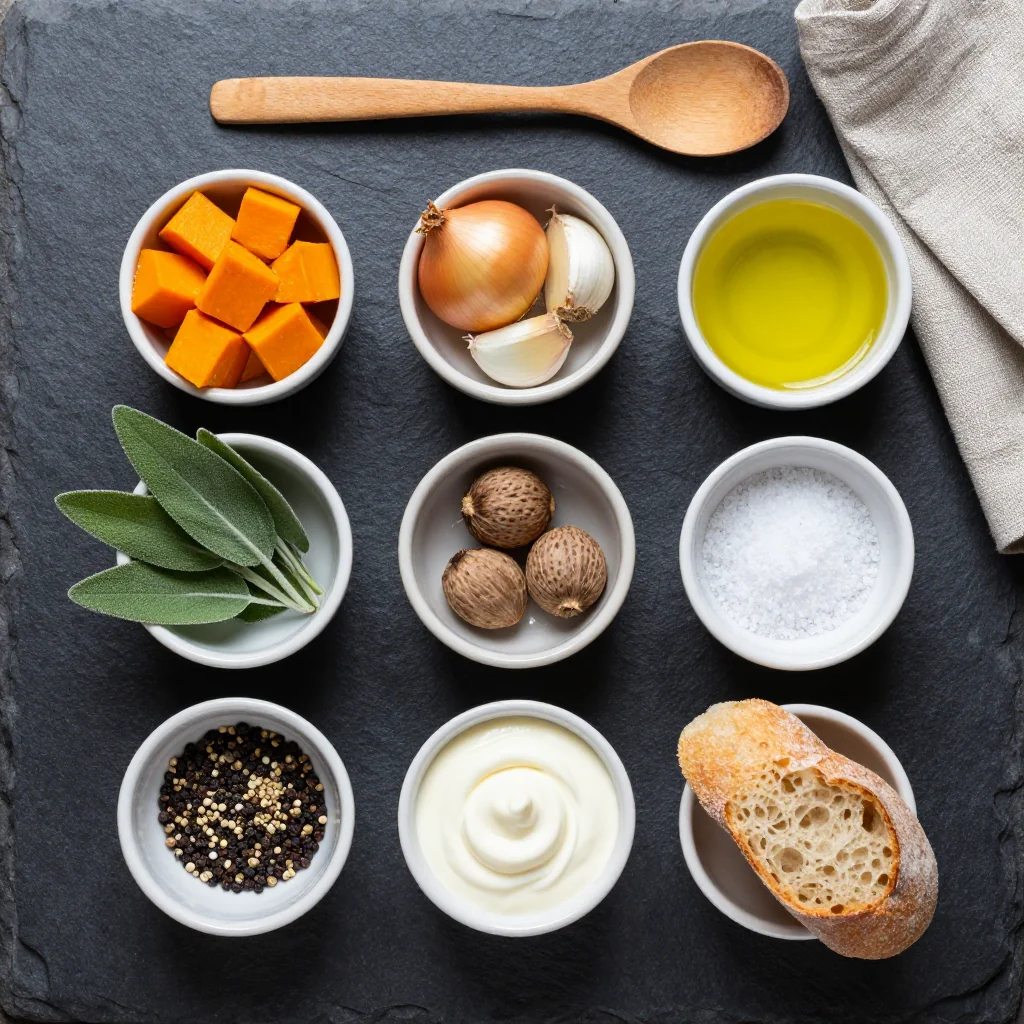
This recipe celebrates simplicity, but each ingredient plays a crucial role in the final symphony of flavors. The butternut squash should feel heavy for its size with a matte, tan skin free from green patches or soft spots. Look for specimens with long necks and small bulbs—these have more usable flesh and are easier to peel. When selecting sage, fresh is absolutely non-negotiable here. The dried herb simply cannot compete with the vibrant, almost minty aroma of fresh sage leaves.
Extra virgin olive oil forms the foundation of our roasting base, helping the squash caramelize beautifully while keeping the soup vegan-friendly. If you prefer, you can substitute with ghee for a nuttier flavor profile. The vegetable broth quality directly impacts your final result—homemade is gold standard, but a good quality low-sodium store-bought version works wonderfully. For the coconut cream, scoop the thick top from a can of full-fat coconut milk rather than using pre-made coconut cream; this gives you control over the richness level.
Don't skip the apple cider vinegar—it might seem odd, but this tiny splash brightens all the other flavors, making the soup taste more complex and balanced. If you don't have apple cider vinegar, a squeeze of fresh lemon juice works too. The maple syrup is optional but recommended, especially if your squash isn't particularly sweet. Start with less and adjust to taste; some squash varieties are naturally sweeter than others.
How to Make Creamy Butternut Squash and Sage Soup for Reset
Roast the Butternut Squash
Preheat your oven to 425°F (220°C). Peel the butternut squash using a sharp vegetable peeler, then cut it in half lengthwise. Scoop out the seeds with a spoon (save them for roasting if you're feeling ambitious!). Cut the squash into 1-inch cubes and spread them on a large baking sheet. Drizzle with 2 tablespoons olive oil, season generously with salt and pepper, and toss to coat evenly. Arrange in a single layer without crowding—this ensures proper caramelization. Roast for 25-30 minutes, stirring once halfway through, until the edges are golden brown and the squash is fork-tender.
Sauté the Aromatics
While the squash roasts, heat the remaining tablespoon of olive oil in a large dutch oven or heavy-bottomed pot over medium heat. Add the diced onion and cook for 5-6 minutes until translucent and starting to caramelize around the edges. Add the minced garlic and cook for another minute until fragrant but not browned. Toss in the fresh sage leaves and cook for 30 seconds, stirring constantly. The sage will crisp up slightly and release its aromatic oils, creating the flavor foundation for your soup.
Build the Soup Base
Add the roasted butternut squash to the pot with the aromatics. Pour in the vegetable broth, ensuring the squash is just covered. Add the bay leaf and bring everything to a gentle simmer. Reduce heat to low, cover partially, and let it bubble away for 15 minutes. This allows all the flavors to meld together beautifully. The squash will become even more tender, making it easier to blend into silk-smooth perfection.
Blend Until Silky
Remove the bay leaf and turn off the heat. Using an immersion blender directly in the pot, blend the soup until completely smooth and creamy. If you don't have an immersion blender, carefully transfer the soup in batches to a regular blender, filling it no more than halfway and holding the lid down with a kitchen towel to prevent hot soup explosions. Blend each batch for at least 30 seconds to ensure maximum creaminess. Return all the blended soup to the pot.
Add the Creamy Element
Stir in the coconut cream and return the soup to low heat. Add the apple cider vinegar, nutmeg, and maple syrup if using. Season with salt and pepper to taste—the soup should taste slightly under-seasoned at this point as the flavors will concentrate as it heats. Let it warm through for 5 minutes, stirring occasionally. The coconut cream will melt into the soup, creating that luxurious mouthfeel that makes this soup feel like a warm hug.
Adjust and Serve
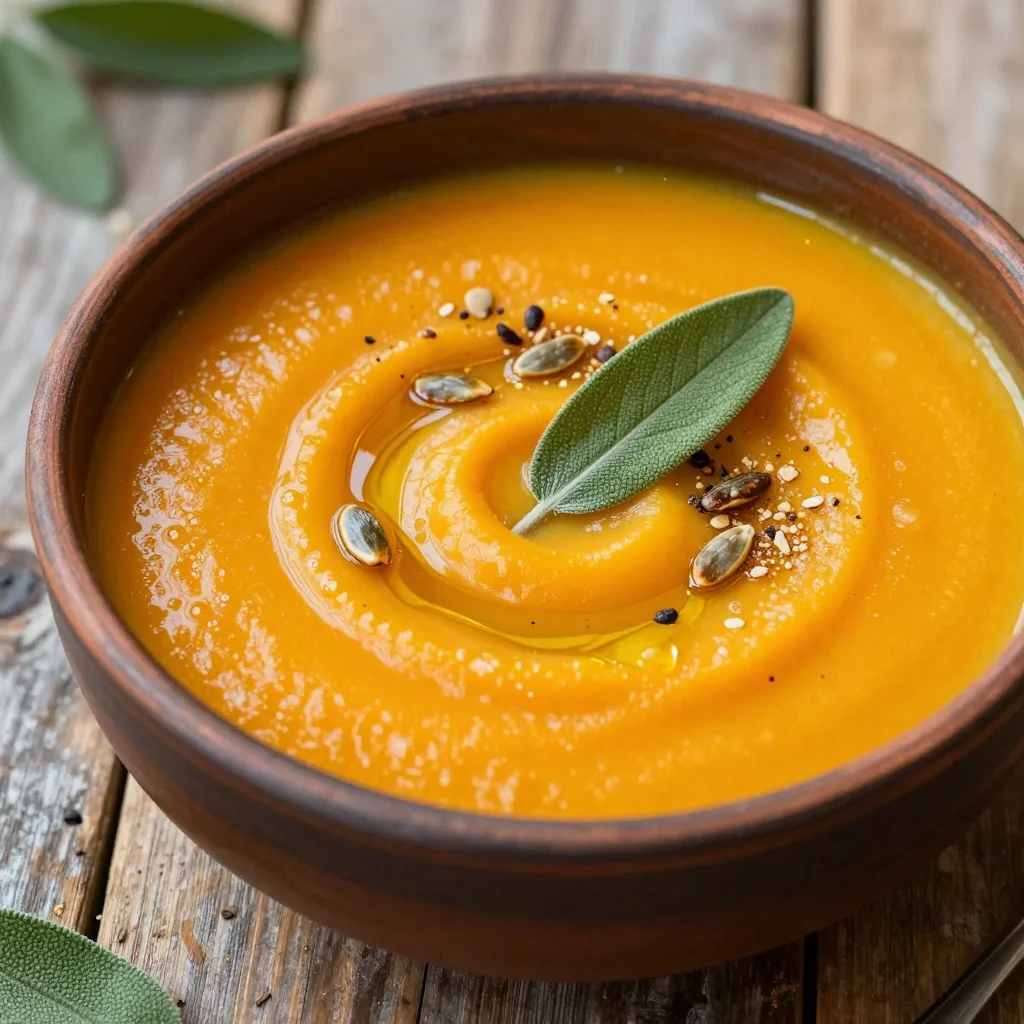
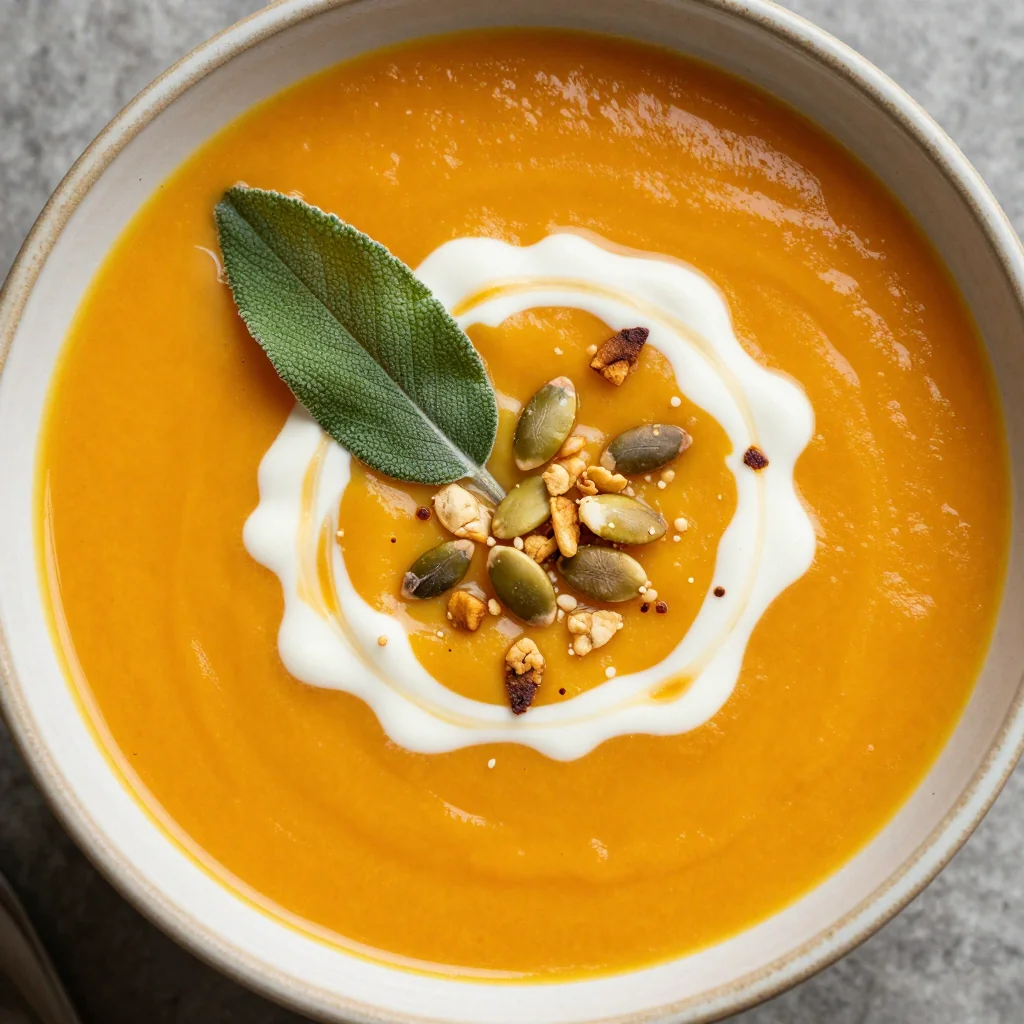
Taste and adjust the seasoning, adding more salt, pepper, or maple syrup as needed. If the soup seems too thick, thin it with additional vegetable broth until it reaches your desired consistency. Ladle into warm bowls and garnish with a swirl of coconut cream, a few crispy sage leaves, and a crack of fresh black pepper. For an extra touch of elegance, drizzle with a few drops of good quality olive oil and sprinkle with toasted pumpkin seeds.
Expert Tips
Roast for Maximum Flavor
Don't rush the roasting process. Those caramelized edges on your squash pieces will add incredible depth to the final soup. If your squash isn't browning, move the rack closer to the heating element or switch to broil for the last 2-3 minutes.
Control Your Consistency
Start with less broth than you think you need—you can always thin the soup later. It's much easier to add liquid than to remove it. The perfect consistency should coat the back of a spoon but still pour easily.
Make It Ahead
This soup tastes even better the next day as the flavors have time to meld. Make a double batch on Sunday and enjoy it throughout the week. It reheats beautifully and can even be frozen for up to 3 months.
Save Your Sage Stems
Don't discard those sage stems! Tie them together with kitchen twine and add them to the pot while the soup simmers. Remove them before blending for an extra layer of sage flavor without any tough bits.
Variations to Try
Protein-Powered Version
Add a can of white beans (cannellini or great northern work best) to the pot before blending. This boosts the protein content while maintaining the creamy texture. You won't taste the beans, but you'll appreciate the staying power.
Adds 8g protein per servingSpiced Apple Edition
Roast one peeled, cored, and diced apple along with the squash. Add 1/2 teaspoon cinnamon and a pinch of cayenne for a sweet-heat combination that transforms this into a completely different soup experience.
Perfect for holiday gatheringsThai-Inspired Twist
Replace the sage with 2 tablespoons of fresh grated ginger and the nutmeg with 1 teaspoon of Thai curry paste. Finish with lime juice instead of apple cider vinegar and garnish with cilantro and chili oil.
Completely transforms the flavor profileSmoky Bacon Version
Cook 4 strips of bacon until crispy, remove and crumble. Use 1 tablespoon of the bacon fat instead of olive oil for sautéing, then garnish with the crumbled bacon. This obviously makes it non-vegan but incredibly satisfying.
For the omnivores in your lifeStorage Tips
This soup is a meal prep dream, storing beautifully in the refrigerator for up to 5 days or in the freezer for up to 3 months. For best results, let the soup cool completely before transferring to airtight containers. I like to portion it into individual servings using glass jars—this makes reheating a breeze and prevents the dreaded "how much soup is left?" mystery. When reheating, always do so gently over low heat, stirring frequently. The coconut cream can sometimes separate if heated too aggressively, but a good whisk will bring it back together.
If freezing, leave about an inch of headspace in your containers for expansion. Pro tip: freeze the soup in silicone muffin tins for perfect single-serving portions. Once frozen solid, pop them out and store in a freezer bag. You can grab exactly what you need and thaw it quickly in the microwave or on the stovetop. The soup may thicken slightly after freezing, so have some vegetable broth on hand for thinning when reheating.
For make-ahead entertaining, this soup is your best friend. You can roast the squash up to 3 days ahead and store it in the refrigerator. When you're ready to serve, simply sauté the aromatics and proceed with the recipe. The soup can be kept warm in a slow cooker on the "keep warm" setting for up to 4 hours—perfect for holiday gatherings or potluck dinners. Just give it a good stir occasionally and add a splash of broth if it thickens too much.
Frequently Asked Questions
Yes, you can use frozen butternut squash in a pinch, but I recommend roasting it from frozen for 20-25 minutes to develop some caramelization. The texture won't be quite as velvety as fresh squash, but it's still delicious. Thaw and drain it first if you're in a hurry, but expect a slightly thinner soup.
A regular blender works perfectly! Blend the soup in batches, filling the blender no more than halfway. Remove the center piece from the blender lid and cover with a kitchen towel to allow steam to escape. Start on low speed and gradually increase to high. Be patient—blend each batch for at least 30 seconds for the smoothest texture.
This recipe is naturally nut-free! The creaminess comes from the butternut squash itself and coconut cream. If you have coconut allergies, you can substitute with cashew cream, oat cream, or even a splash of heavy cream if you're not vegan.
The squash is ready when the edges are golden brown and caramelized, and a fork slides easily through the thickest pieces. Some pieces may have darker edges—that's perfect! Those caramelized bits add incredible depth of flavor to your soup.
Absolutely! This recipe doubles beautifully and freezes perfectly. You'll need a very large pot or dutch oven, and you may need to roast the squash in two batches depending on your oven size. The only adjustment needed is slightly longer cooking time when bringing the larger volume to a simmer.
Crusty sourdough bread is classic, but I love it with homemade croutons, a simple green salad dressed with lemon vinaigrette, or grilled cheese sandwiches. For a more substantial meal, serve with quinoa or farro on the side. The soup also makes an elegant starter for a dinner party—serve in small cups with a sage leaf garnish.
Creamy Butternut Squash and Sage Soup for Reset
Ingredients
Instructions
- Roast the squash: Preheat oven to 425°F. Toss cubed squash with 2 tablespoons olive oil, season with salt and pepper, and roast for 25-30 minutes until golden and tender.
- Sauté aromatics: In a large pot, heat remaining oil over medium heat. Cook onion until translucent, 5-6 minutes. Add garlic and sage, cook 1 minute more.
- Build soup base: Add roasted squash to the pot with aromatics. Pour in vegetable broth and add bay leaf. Simmer covered for 15 minutes.
- Blend until smooth: Remove bay leaf and blend soup until completely smooth using an immersion blender or regular blender.
- Finish and season: Stir in coconut cream, vinegar, nutmeg, and optional maple syrup. Warm through and adjust seasoning to taste.
- Serve: Ladle into warm bowls and garnish with a swirl of coconut cream and crispy sage leaves.
Recipe Notes
For the creamiest texture, blend the soup for at least 30 seconds. The soup thickens as it cools, so thin with additional broth when reheating. Garnish with toasted pumpkin seeds for added crunch and nutrition.