I still remember the night this bowl of chaos was born. It was 11:47 p.m., the fridge was practically empty except for a lonely pack of instant ramen, two chicken breasts, and a half-pint of cream that was one day away from staging a coup. My roommate had just texted me a blurry photo of a neon-red ramen bowl from some underground spot downtown with the caption “bet you can’t top this.” Challenge accepted, sleep forfeited. Twenty-five minutes later I was standing over the stove in mismatched socks, whisking garlic into bubbling cream while the chicken hissed and spat like it had a personal vendetta against me. The smell that floated through the apartment was obscene—garlic, chili, soy, and that rich dairy-fat cloud that makes you forget every bad decision you’ve ever made. I lifted the first spoonful, blew on it twice, and the flavor hit like a firework: spicy, creamy, salty, and somehow both comforting and reckless. I ate the entire pot standing up, leaning against the counter, swearing softly between bites because it was that good and I was that shocked. By the time I washed the bowl, I knew I had to write it all down before the sleep-deprived haze erased the ratios. That scribbled index card is now stained with chili oil and framed in my kitchen—my proudest accidental invention.
Most recipes treat ramen like a quick fix, a sad late-night surrender. This one treats it like the main event, the reason you invite people over and hover by the table waiting for their eyes to widen after the first slurp. The secret isn’t some exotic ingredient you have to special-order from the dark corners of the internet; it’s the way we build layers—searing the chicken until the edges caramelize into savory candy, blooming the garlic and paprika in the rendered fat so they taste ten times bigger, then letting heavy cream reduce until it coats the noodles like liquid velvet. The chili sauce adds heat that blooms slow and steady rather than throat-kicking you on contact, which means you keep eating just to ride the warmth. And because we’re using instant ramen, the whole thing is week-night doable but tastes like you’ve been simmering bones since dawn. If you’ve ever struggled with watery, bland ramen hacks, you’re not alone—and I’ve got the fix.
Picture yourself pulling this off at home: the saucepan clinking, the steam fogging up your glasses, the first taste so intense you pause mid-chew and stare at the wall wondering where this recipe has been all your life. Your neighbors will smell it through the vent and casually ask what you’re cooking. Your cat will circle your ankles in a way that feels like applause. You will promise yourself you’ll save half for tomorrow, then go back for “just one more bite” until the spoon scrapes ceramic and you’re grinning like you got away with something. Let me walk you through every single step—by the end, you’ll wonder how you ever made it any other way.
What Makes This Version Stand Out
- Flavor Depth: We sear, deglaze, and reduce so the broth tastes like it simmered for hours even though the clock says thirty minutes. That fond on the bottom of the pan? Liquid gold—scrape it up.
- Texture Play: Tender chicken, springy ramen, and a sauce thick enough to cling but light enough to slurp—no sad, soupy puddles at the bottom of your bowl.
- Heat with Purpose: Chili sauce gives a warm glow, not a scorched tongue, so you taste garlic, cream, and chicken first, then feel the slow burn that keeps you coming back.
- Pantry Friendly: Every ingredient is a supermarket staple; no specialty ramen bars required. If you keep chicken, cream, garlic, and soy in rotation, you’re always fifteen minutes away from greatness.
- One-Pot Wonder: The same skillet handles chicken, sauce, and final toss, which means fewer dishes and more time to brag on Instagram.
- Make-Ahead Magic: Double the sauce, freeze half, and on a desperate Wednesday you just boil noodles and reheat. Dinner solved, ego boosted.
Alright, let’s break down exactly what goes into this masterpiece...
Inside the Ingredient List
The Flavor Base
Chicken breasts get a bad rap for drying out, but cut them into bite-sized chunks and sear them hard and fast and they turn into juicy nuggets that drink up every drop of sauce. The Maillard browning gives us those deep, roasty notes that fake broth could never deliver. If you only have thighs, go for it—just trim the extra fat so the final dish doesn’t feel greasy. Salt and pepper look humble, but this is their moment to shine; season the chicken like you mean it, tasting as you go, because under-seasoned protein is the fastest way to murder an otherwise perfect bowl.
The Texture Crew
Instant ramen noodles are the underdog hero here. Toss the sodium-bomb seasoning packet and let the curly strands do what they do best: cook in two minutes and grab onto sauce like Velcro. Heavy cream is the silk scarf that makes everything feel luxurious; reduce it until it thickly coats the back of a spoon and you’ll understand why calories were invented. Garlic, when minced fine and sautéed just until fragrant, becomes sweet and mellow, not harsh and acrid—watch the color; the second it turns straw-gold, pour in the cream to stop the cooking.
The Heat & Umami Duo
Chili sauce choice is personal. I keep it simple with the sambal-style jar in the international aisle—chunky, tangy, and bright red. If you prefer sriracha, pull back by half a tablespoon; it’s sweeter and can hijack the balance. Soy sauce brings the umami bass line, the salty depth that makes cream taste cheesier and chicken taste roast-ier. Paprika adds subtle smoke and a russet blush that turns the sauce a color no filter can fake.
The Final Flourish
Chicken broth loosens everything into slurpable territory. Go low-sodium so you can control the salt; you can always add more, but you can’t un-salt a tidal wave. A final crack of fresh pepper right before serving blooms in the hot broth and makes the whole kitchen smell like you actually know what you’re doing. Everything’s prepped? Good. Let’s get into the real action...
The Method — Step by Step
- Start by patting the chicken cubes bone-dry with paper towels—moisture is the enemy of caramelization. Season aggressively with salt, pepper, and half the paprika; toss until every piece looks dusty and blushed. Heat a wide, heavy skillet over medium-high until a drop of water skitters across the surface like it’s late for a meeting. Add just enough oil to film the bottom, then lay the chicken in a single, defiant layer and don’t touch it for three full minutes. I dare you to taste a raw piece later and not realize this sear is what separates restaurant mystique from sad gray meat.
- When the edges turn golden and release freely from the pan, flip each cube with tongs and let the second side pick up color for another two minutes. You’ll see sticky brown bits sticking to the skillet; that’s concentrated flavor, so don’t you dare scrub it away. Transfer the chicken to a warm plate, leaving the rendered fat behind—this liquid gold will season the garlic and bloom the spices. Lower the heat to medium, scatter in the minced garlic, and stir until it smells like you walked into an Italian grandma’s dream.
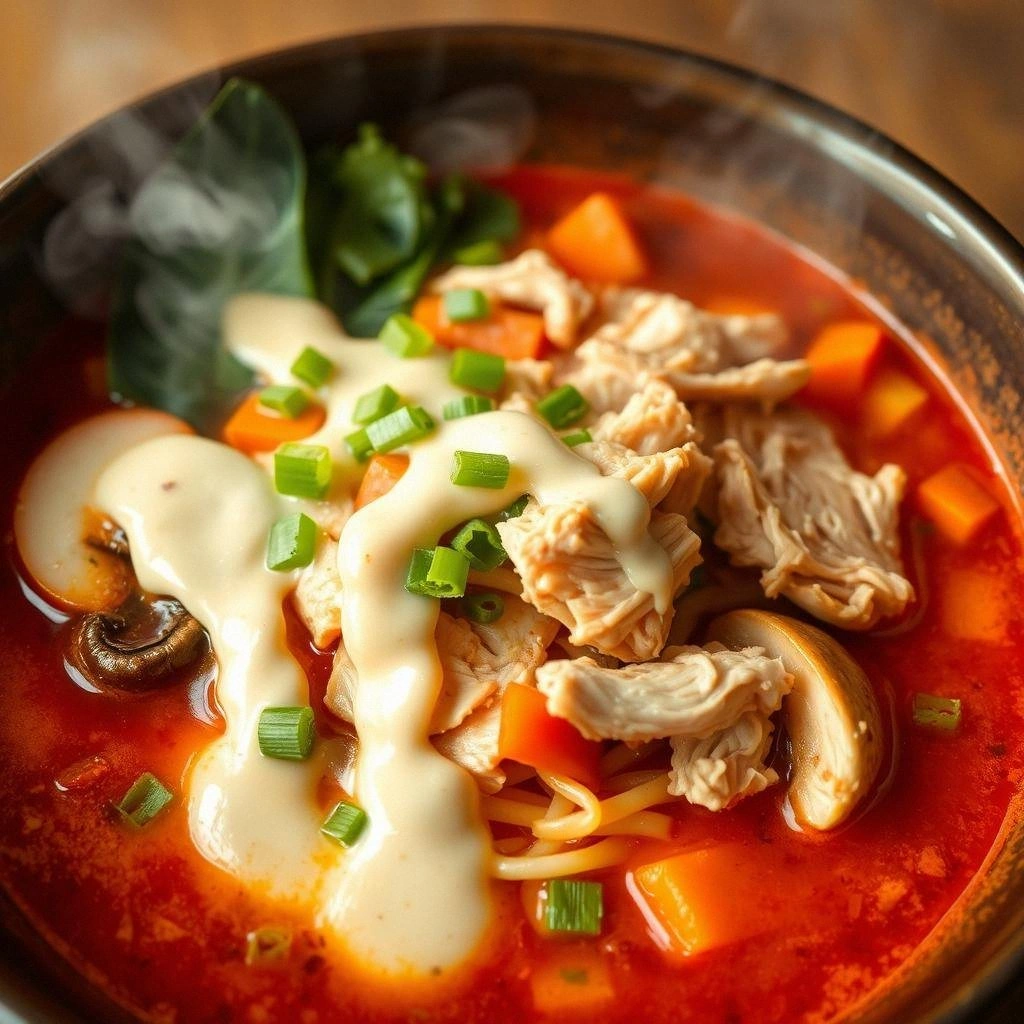
- Now the fun part: pour in the chicken broth and scrape the bottom with a wooden spoon until the pan looks shiny and new again. The broth will pick up all that color and turn a deep mahogany. Stir in soy sauce and chili sauce, bring to a lively simmer, and let it reduce by about one-third; this concentrates the salt and heat so the final broth doesn’t taste thin. Your kitchen will start to smell like a back-alley ramen shop at 2 a.m.—embrace it.
- Reduce the heat to low and pour in the heavy cream in a slow, steady stream while whisking. The sauce will lighten to a dusty rose and thicken enough to coat the back of a spoon; if you drag your finger across the spoon, the line should hold. Add the remaining paprika for color and let it gently bubble for two minutes—any longer and the cream can break, turning grainy. Okay, ready for the game-changer?
- Return the seared chicken and any resting juices to the skillet, folding until every cube is lacquered in creamy fire. Crack fresh black pepper over the top, cover, and let it simmer gently while you cook the ramen. This five-minute marriage allows the chicken to finish cooking and absorb the spicy garlic bath. Taste a cube; it should be juicy, not rubbery, and carry a slow, building heat that makes you reach for another before you’ve swallowed the first.
- Bring a medium pot of water to a boil, salt it like the ocean, and drop in the ramen blocks. Ignore the package time; cook for exactly two minutes so the noodles stay springy and don’t turn into sad shoelaces. Drain immediately and rinse under hot tap water for five seconds to wash off excess starch—this keeps the sauce silky instead of gummy. Add the noodles straight into the skillet, tossing with tongs until every strand is painted orange-gold and begging to be slurped.
- Kill the heat, add a final splash of broth if the sauce looks tight, and taste one last time—this is your moment to tweak. Want more fire? Stir in an extra teaspoon of chili sauce. Need brightness? A squeeze of lime lifts the whole bowl. Serve immediately in deep, warm bowls; cold ceramic steals heat faster than a thief in the night. Garnish with whatever makes you smile—sliced scallions, a jammy seven-minute egg, or just an extra crank of pepper because you’re a rebel.
That’s it—you did it. But hold on, I’ve got a few more tricks that’ll take this to another level...
Insider Tricks for Flawless Results
The Temperature Rule Nobody Follows
Keep the cream at a gentle simmer, never a rolling boil. High heat shocks the dairy proteins, causing them to clump and weep like they just watched a sad movie. If you see tiny bubbles forming around the edge, you’re in the sweet spot; anything more violent and you risk a grainy sauce that even immersion-blender magic can’t fix. A friend tried rushing this step once—let’s just say her dinner guests politely chewed like they were eating wet sand.
Why Your Nose Knows Best
Trust your sense of smell as an internal timer. When the garlic first hits the fat, it will smell sharp and almost spicy; thirty seconds later it mellows into something sweet and nutty. The moment you detect that candy-like aroma, pour in the broth. Waiting longer pushes it from golden to bitter, and bitter garlic will bully every other flavor out of the bowl. If you’ve ever wondered why some creamy sauces taste acrid, chances are the garlic crossed that line.
The 5-Minute Rest That Changes Everything
After you combine noodles and sauce, cover the skillet and let it sit off-heat for five minutes. The starches relax, the sauce tightens, and the chicken soaks up just enough surrounding heat to become even more tender. This short nap is the difference between good ramen and the kind that makes you close your eyes involuntarily. I’ll be honest—I ate half the batch before anyone else got to try it during this rest period, so set a timer or risk sharing an empty pot.
Creative Twists and Variations
This recipe is a playground. Here are some of my favorite ways to switch things up:
Thai Coconut Blaze
Swap the heavy cream for full-fat coconut milk and add a teaspoon of fish sauce plus the zest of half a lime. The result is lighter, fragrant, and tastes like you’re slurping noodles on a Bangkok sidewalk while tuk-tuks zoom past. Top with torn Thai basil and crispy fried shallots for crunch.
Smoky Bacon Upgrade
Render three strips of chopped bacon first, then sear the chicken in the drippings. The smoky pork fat mingles with the chili and garlic, giving the sauce a campfire vibe. Crumble the cooked bacon over each bowl for salty pops that contrast the silkiness of the cream.
Mushroom Madness
Toss in a handful of sliced cremini mushrooms after the chicken exits the pan; let them brown and soak up the fond before you add the broth. Earthy mushrooms stretch the meaty flavor, making this version taste almost like stroganoff with a chili kick. Vegetarians can skip the chicken and use mushroom broth for an equally hearty bowl.
Green Veg Boost
Stir in two cups of baby spinach during the final simmer; the leaves wilt in seconds and add a fresh, grassy note that cuts through the richness. If you’re feeling fancy, blanched asparagus tips or snap peas bring color and crunch without extra pots.
Breakfast Ramen Hack
Top each portion with a runny fried egg and a drizzle of maple syrup. The sweet-salty-yolk combo turns leftovers into brunch gold, and the syrup tames the heat for anyone who woke up delicate. Serve with iced coffee and watch the skeptics convert.
Seafood Spin
Replace chicken with peeled shrimp; sear them just until pink and curl, then proceed as written. Seafood cooks faster, so keep a hawk eye—overcooked shrimp feel like rubber bands in your teeth. A final squeeze of lemon brightens the ocean-sweet cream.
Storing and Bringing It Back to Life
Fridge Storage
Transfer cooled noodles and sauce to an airtight container and refrigerate up to three days. Press plastic wrap directly onto the surface to prevent a skin from forming. The flavors meld and intensify overnight, so day-two bowls can taste even better—if you have that kind of willpower.
Freezer Friendly
Freeze individual portions in zip-top bags, flattened so they thaw quickly. Squeeze out excess air to ward off freezer burn, and label with the date; after two months the cream can grain slightly, though it’s still safe. Thaw overnight in the fridge, not on the counter, to keep bacteria from throwing a rave.
Best Reheating Method
Add a splash of broth or milk to a small pan over medium-low heat, dump in the ramen, and stir gently until just steaming. Microwaves work in a pinch, but they heat unevenly and can turn noodles gummy; if you must, cover loosely and use 50 % power in thirty-second bursts. Add a tiny splash of water before reheating—it steams back to perfection and loosens the sauce without diluting flavor.