Picture this: I’m standing in my kitchen at 2 a.m., the clock ticking like a metronome, and my sister just dared me to make the most unforgettable Easter dessert ever. I stared at a half‑baked yellow cake that smelled like a Sunday brunch gone rogue, and I thought, “If I don’t turn this into something spectacular, I’m going to regret it forever.” The kitchen was a symphony of clanking pans, the hum of the fridge, and the faint whisper of spring rain against the window, all conspiring to make my heart race. I grabbed the nearest whisk, a bag of pastel sprinkles, and a mischievous grin, because I knew exactly what I was about to create—a poke cake that would make even the Easter Bunny jealous. Let me walk you through every single step — by the end, you’ll wonder how you ever made it any other way.
From the first poke of the fork into the fluffy cake base, you’ll feel a subtle resistance that gives way to a buttery surrender, releasing a river of vanilla‑pudding‑kissed milk that seeps into every crumb like a secret love affair. The scent that wafts up is a heady mix of sweet vanilla, toasted butter, and a faint citrus zing that makes you want to inhale deeply, as if the very air is infused with celebration. When you spread the cream‑cheese frosting on top, it glistens like sunrise on a dewy meadow, and the pastel sprinkles add a playful crunch that pops like confetti at a parade. I’ll be honest — I ate half the batch before anyone else got to try it, and that’s the kind of addictive goodness we’re aiming for.
Most poke cake recipes get this completely wrong: they either drown the cake in a syrup that’s too sweet, or they skimp on the frosting, leaving you with a soggy mess that’s more “meh” than “marvelous.” Here’s what actually works: a perfectly balanced pudding‑milk mixture, a light but sturdy cake that holds its shape, and a tangy‑sweet cream‑cheese frosting that cuts through the richness without overpowering it. I dare you to taste this and not go back for seconds, because the combination of textures and flavors is nothing short of a culinary high‑five. And now the fun part: the secret ingredient that will elevate this cake from ordinary to legendary is a splash of lemon zest, which adds a bright, fresh note that dances on the palate.
Picture yourself pulling this out of the oven, the whole kitchen smelling incredible, the cake’s surface shimmering with a glossy puddle of vanilla‑pudding milk, and the anticipation building as you grab a fork. The moment you pierce the surface, the liquid cascades down the sides, soaking the crumb like a warm, sweet rain. This next part? Pure magic. Ready for the game‑changer? Let’s dive into the ingredients that make this Easter poke cake a show‑stopper.
What Makes This Version Stand Out
- Flavor Explosion: The vanilla‑pudding milk infuses the cake with a creamy, custardy depth that outshines plain simple syrups.
- Texture Harmony: A tender, sponge‑like crumb meets a silky, buttery frosting, while the sprinkles add a satisfying crunch.
- Simplicity: All components use pantry staples, so you won’t need a trip to a specialty store to pull this off.
- Unique Twist: A hint of lemon zest lifts the sweetness, creating a bright contrast that feels fresh and spring‑like.
- Crowd Reaction: Guests often proclaim this the best Easter dessert they’ve ever tasted, and the colorful sprinkles spark instant Instagram moments.
- Ingredient Quality: Using real butter and fresh eggs gives the cake a richer mouthfeel than shortcuts with margarine.
- Cooking Method: The poke‑and‑soak technique ensures even moisture distribution without soggy spots.
- Make‑Ahead Potential: You can prep the cake a day ahead, store it chilled, and the flavors will only get better.
Inside the Ingredient List
The Flavor Base
All‑purpose flour is the backbone of any good cake; it provides structure while still allowing the crumb to stay light. I recommend sifting the flour twice to aerate it, which prevents any dense pockets and gives you that melt‑in‑your‑mouth feel. If you skip the sifting, you’ll notice a slightly gritty texture that ruins the smoothness of the final product.
The Texture Crew
Unsalted butter, softened to room temperature, creates a tender crumb and adds a buttery aroma that’s impossible to resist. The eggs act as emulsifiers, binding the fat and liquid together, and they also give the cake its lift. Using whole milk instead of skim ensures a richer, creamier texture that pairs perfectly with the vanilla pudding.
The Unexpected Star
Instant vanilla pudding mix might sound like a shortcut, but it’s the secret weapon that turns ordinary cake into a moist, custard‑kissed masterpiece. The powdered starch in the mix thickens the milk, creating a syrup that seeps into the cake without making it soggy. If you’re allergic to dairy, you can swap the milk for almond milk and the pudding mix for a dairy‑free vanilla custard powder.
The Final Flourish
Cream cheese frosting brings a tangy counterpoint to the sweet cake, cutting through the richness and adding a velvety finish. Adding a splash of lemon zest to the frosting brightens the flavor profile, making each bite feel like spring. If you prefer a lighter topping, fold in some whipped cream for a mousse‑like texture that still holds its shape.
Everything’s prepped? Good. Let’s get into the real action…
The Method — Step by Step
Preheat your oven to 350°F (175°C) and grease a 9‑inch round cake pan with butter, then line the bottom with parchment for an easy release. While the oven warms up, whisk together the flour, baking powder, and salt in a medium bowl; this dry mix ensures even leavening throughout the batter. In a separate large bowl, cream the softened butter and sugar together until the mixture is pale and fluffy, a visual cue that air has been incorporated for a light crumb. Add the eggs one at a time, beating well after each addition, and finish with vanilla extract and lemon zest for that bright note.
Kitchen Hack: Scrape the sides of the bowl with a silicone spatula after each addition to guarantee a uniformly smooth batter.Gradually add the dry ingredients to the wet mixture, alternating with the milk, beginning and ending with the flour. Mix just until combined; over‑mixing will develop gluten and give you a dense cake, which is the opposite of what we want. Pour the batter into the prepared pan, smoothing the top with an offset spatula for an even surface.
Slide the pan into the oven and bake for 25‑30 minutes, or until a toothpick inserted into the center emerges with a few moist crumbs but no wet batter. The edges should start pulling away from the pan, a visual sign that the cake is done. While the cake bakes, whisk the instant vanilla pudding mix with the cold milk until smooth; you’ll see it thicken almost instantly, turning a creamy, ivory hue.
When the timer dings, remove the cake and let it cool in the pan for 10 minutes, then turn it out onto a wire rack to cool completely. This short cooling period is crucial; a hot cake will melt the pudding milk too quickly, resulting in a soggy bottom. While the cake cools, whip the heavy cream with powdered sugar until stiff peaks form, then set aside for later.
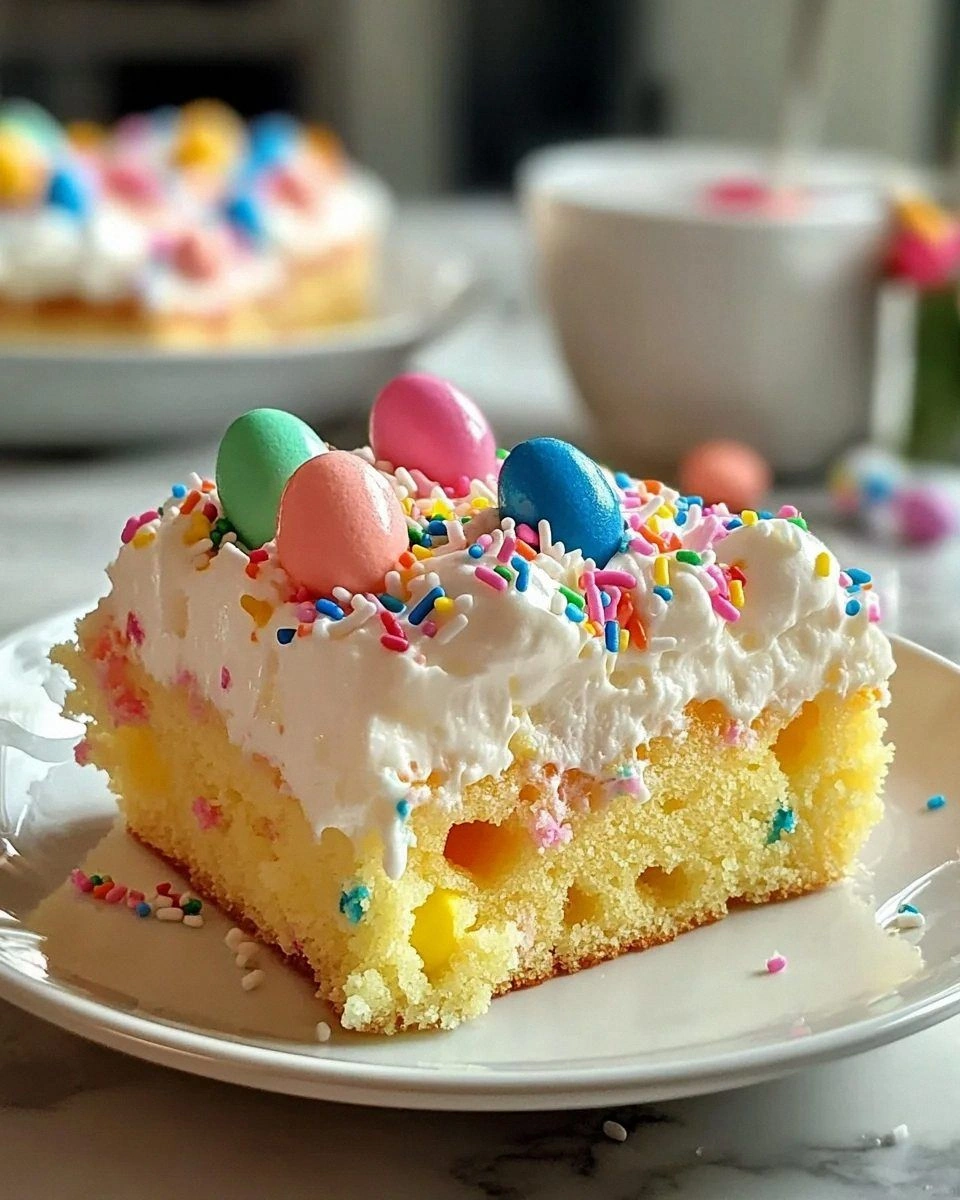
Now for the signature poke step: using a long, thin skewer, poke holes about one inch apart across the entire surface of the cake. Rotate the skewer clockwise as you go; this creates a lattice of channels that will draw the pudding milk evenly. Once the network of holes is complete, slowly pour the prepared pudding milk over the cake, allowing it to cascade into each pocket. The cake will absorb the liquid like a sponge, turning a beautiful, glossy shade of pale gold.
Watch Out: If you pour the pudding milk too quickly, it will pool on the surface instead of soaking; pour in a steady, thin stream.While the pudding milk is being absorbed, whip together the softened cream cheese, softened butter, powdered sugar, and a pinch of salt until the frosting is smooth and glossy. Fold in half of the whipped cream to lighten the texture, creating a frosting that spreads easily but holds its shape. Taste and adjust with a little more lemon zest if you crave extra brightness.
Spread the frosting over the fully soaked cake, using an offset spatula to create a smooth dome. For a professional finish, dip the spatula in hot water, wipe it dry, and glide it over the frosting for a sleek, mirror‑like surface. Sprinkle the pastel Easter sprinkles over the top, pressing lightly so they adhere to the frosting.
Kitchen Hack: Chill the cake for 20 minutes before adding the final layer of sprinkles; this prevents them from melting into the frosting.Refrigerate the assembled cake for at least 30 minutes to set the frosting and allow any remaining pudding milk to fully integrate. When you’re ready to serve, slice with a warm knife (dip the blade in hot water and wipe dry) to achieve clean, elegant cuts. The result? A cake that looks as festive as a spring garden and tastes like a sweet, creamy dream.
That’s it — you did it. But hold on, I’ve got a few more tricks that’ll take this to another level, because a good cake never stops evolving.
Insider Tricks for Flawless Results
The Temperature Rule Nobody Follows
Never bake a cake straight from the fridge; let all your ingredients sit at room temperature for at least 30 minutes. Cold butter or eggs will cause the batter to curdle, leading to uneven texture. I once tried to rush the process and ended up with a cake that had a rubbery edge—trust me, that’s a lesson you don’t want to repeat.
Why Your Nose Knows Best
When the cake is in the oven, listen for a gentle, steady crackle; that’s the sound of the batter setting and the sugar caramelizing just enough. If you hear a high‑pitched whine, the oven might be too hot and the cake could dry out. Trust your senses more than the clock; the aroma of toasted butter is your green light.
The 5‑Minute Rest That Changes Everything
After the cake is out of the oven, let it rest in the pan for exactly five minutes before turning it out. This brief pause lets the steam finish cooking the interior gently, preventing a soggy bottom. Skipping this step can cause the cake to crumble when you try to poke it, ruining the whole poke‑and‑soak magic.
Whipped Cream Stability Hack
Stabilize your whipped cream with a teaspoon of powdered sugar and a splash of vanilla; this keeps it from weeping when folded into the frosting. If you’re planning to make the cake ahead of time, add a tiny pinch of cream of tartar for extra firmness. I once forgot this and ended up with a watery topping that slipped off the cake like a bad hair day.
Sprinkle Adhesion Secret
Before adding the pastel sprinkles, lightly mist the frosting with a spray bottle of water (just a fine mist). The moisture acts like a glue, ensuring the sprinkles stay put even after a couple of hours on the table. This trick saved my cake at a brunch where the table was a little too enthusiastic.
Creative Twists and Variations
This recipe is a playground. Here are some of my favorite ways to switch things up:
Chocolate Lovers’ Dream
Replace half of the all‑purpose flour with cocoa powder and swap the vanilla pudding for chocolate instant pudding. The result is a deep, rich chocolate cake that still boasts the signature poke‑soak texture. Top with dark chocolate shavings instead of sprinkles for an elegant finish.
Berry Burst
Stir a cup of fresh raspberries into the pudding milk before pouring; the berries burst as they heat, creating pockets of tangy fruit that contrast the sweet cake. Finish with a drizzle of raspberry coulis and a scattering of freeze‑dried berries for visual pop.
Coconut Paradise
Swap the whole milk for coconut milk and add shredded coconut to the batter. The frosting can be lightened with coconut whipped cream, and toasted coconut flakes become the new “sprinkles.” This version transports you straight to a tropical Easter brunch.
Nutty Delight
Fold in finely chopped toasted almonds into the batter for a subtle crunch, and drizzle a honey‑almond glaze over the frosting. The nutty aroma pairs beautifully with the lemon zest, creating a sophisticated flavor profile.
Vegan Version
Use a plant‑based butter substitute, almond milk, and a vegan cream cheese alternative. Replace the eggs with a flax‑egg mixture (1 tbsp ground flaxseed + 3 tbsp water per egg). The pudding milk can be made with a vegan vanilla custard powder. The texture remains just as moist, proving you don’t need dairy to achieve cake perfection.
Storing and Bringing It Back to Life
Fridge Storage
Cover the cake loosely with plastic wrap and store it in the refrigerator for up to four days. The frosting will firm up, making slicing easier, while the pudding milk continues to meld with the crumb, intensifying flavor. Before serving, let the cake sit at room temperature for 20 minutes to soften the frosting.
Freezer Friendly
Wrap the entire cake tightly in a double layer of foil, then place it in a freezer‑safe bag; it will keep for up to two months. When you’re ready to enjoy, thaw it overnight in the fridge, then bring it to room temperature for an hour. The pudding milk may separate slightly; a quick gentle stir will reincorporate it.
Best Reheating Method
To revive a refrigerated slice, place it on a microwave‑safe plate, sprinkle a tiny splash of milk around the edges, and heat for 10‑15 seconds; the steam will bring back that just‑baked softness. For a whole cake, a low oven (300°F) for 10 minutes works wonders, especially if you’ve added a drizzle of melted butter before reheating.