Love this? Pin it for later! 📌
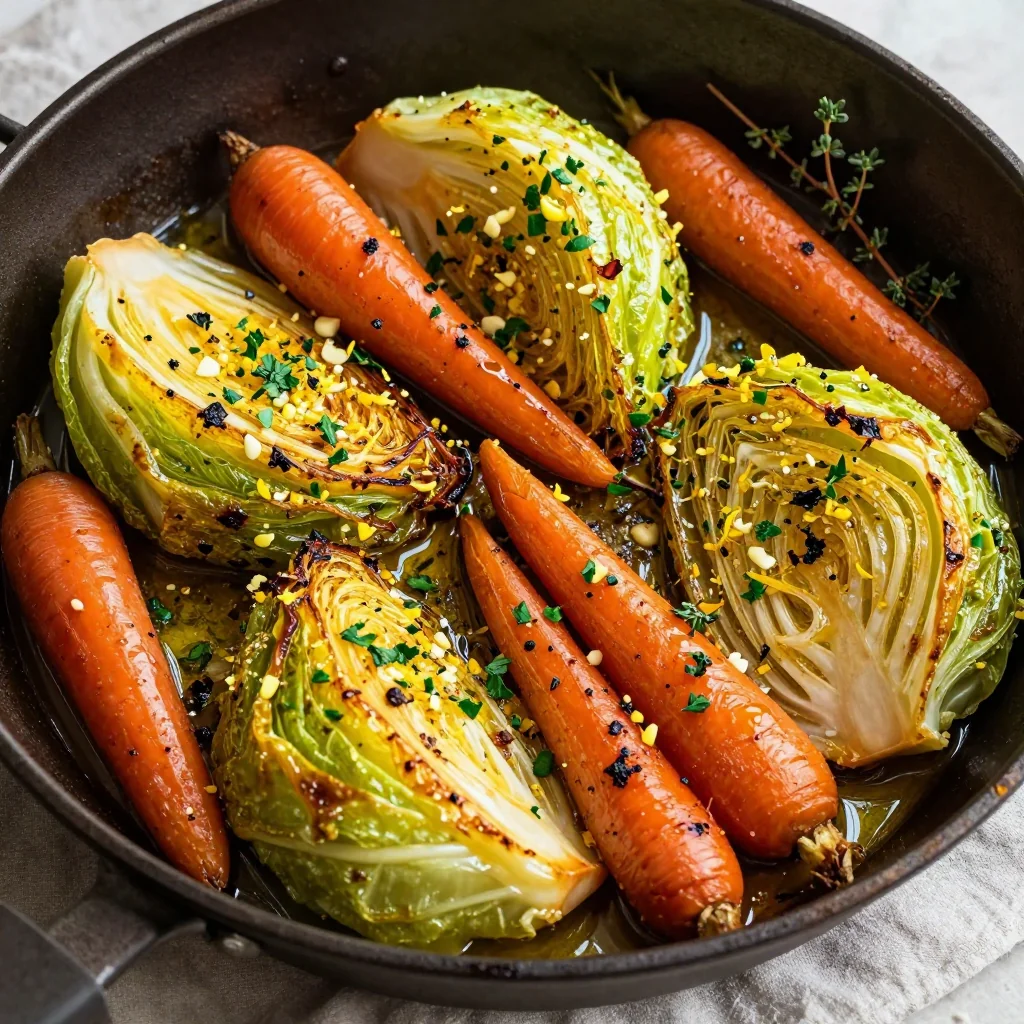
When autumn's chill begins to creep through the windows and the days grow shorter, my kitchen transforms into a sanctuary of warmth and aroma. There's something deeply comforting about pulling a sheet pan of caramelized vegetables from the oven—the way the lemon zest mingles with roasted garlic, creating an intoxicating perfume that wraps around you like a favorite wool sweater. This roasted cabbage and carrot dish has become my family's weekly ritual, a recipe born from necessity when the refrigerator revealed only these humble vegetables one Tuesday evening.
What started as a desperate attempt to avoid another grocery run has evolved into the most requested dinner in our household. The magic lies in the transformation: tough cabbage leaves become lusciously tender with crispy, charred edges, while sweet carrots develop a deep, almost honey-like sweetness. The lemon and garlic don't just season—they elevate these simple vegetables into something extraordinary, something that makes even my vegetable-skeptical teenager ask for seconds.
This isn't just a side dish pretending to be dinner. By slicing the cabbage into thick steaks and cutting the carrots into substantial batons, we're creating a meal that satisfies on every level. The high-heat roasting concentrates flavors, turning each bite into a perfect balance of sweet, tangy, and savory. It's the kind of dish that tastes like you've spent hours in the kitchen when really, you've spent most of that time relaxing while the oven does the heavy lifting.
Why This Recipe Works
- High-Heat Roasting: The 425°F temperature creates perfect caramelization, developing those coveted crispy edges while maintaining tender interiors
- Lemon Zest Technique: Adding zest at two stages—before roasting for depth, and after for brightness—creates layers of citrus complexity
- Cabbage Steaks: Cutting thick 1-inch slices prevents the cabbage from becoming mushy and creates substantial, meaty portions
- Garlic Infusion: Using both minced fresh garlic and garlic powder ensures every bite is packed with savory flavor
- Make-Ahead Friendly: Prep vegetables up to 24 hours in advance, making weeknight dinners effortless
- Budget-Conscious: Two heads of cabbage and two pounds of carrots feed six hungry people for under $10
- Nutrient-Dense: Packed with Vitamin C, fiber, and antioxidants while being naturally vegan and gluten-free
Ingredients You'll Need
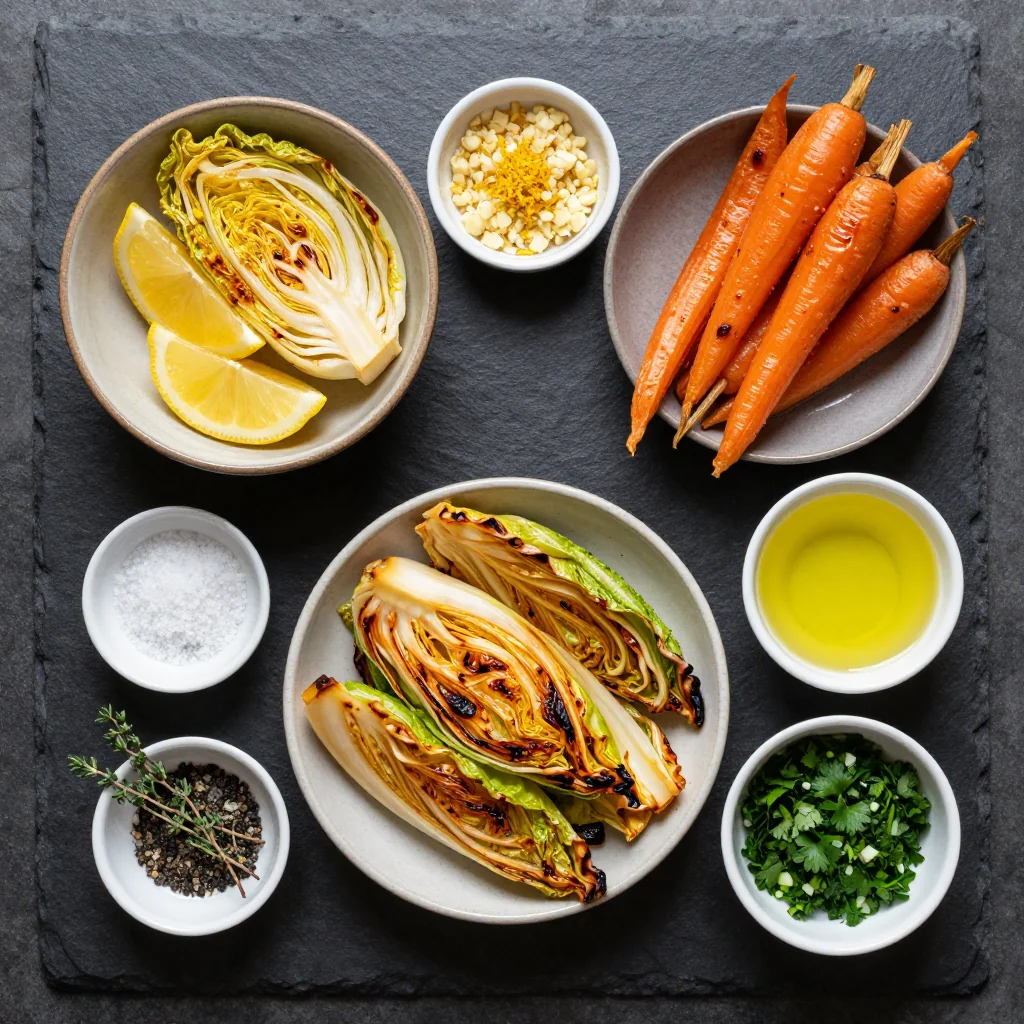
The beauty of this recipe lies in its simplicity—just a handful of ingredients that, when combined and roasted, create something far greater than the sum of their parts. Here's what you'll need and why each ingredient matters:
The Vegetables
Green Cabbage (2 medium heads): Look for heads that feel heavy for their size with tightly packed, crisp leaves. Avoid any with yellowing or soft spots. Green cabbage works best here—it becomes meltingly tender while maintaining structure. Red cabbage can be used but will turn an unappetizing gray color when roasted at high heat.
Carrots (2 pounds): Choose medium-sized carrots that are firm and smooth. Avoid baby carrots, which lack flavor and become mushy. If you can find rainbow carrots, they add beautiful color variety. The natural sweetness of carrots intensifies during roasting, creating a perfect counterpoint to the savory cabbage.
The Flavor Base
Extra Virgin Olive Oil (½ cup): Don't skimp here—good olive oil carries flavors and helps vegetables caramelize properly. A fruity, robust oil adds depth. If needed, avocado oil works as a substitute, but avoid neutral oils like canola or vegetable oil that lack personality.
Garlic (8 large cloves): Fresh garlic is non-negotiable. The way it roasts and becomes sweet and mellow is essential to the dish's success. Look for plump, firm cloves without green shoots. In a pinch, you can use pre-peeled cloves, but avoid jarred minced garlic which tastes acrid.
Lemons (3 large): You'll need both zest and juice, so choose unwaxed, organic lemons if possible. The zest contains essential oils that provide intense lemon flavor, while the juice adds brightness. Meyer lemons work beautifully here for a sweeter, more floral note.
The Seasonings
Sea Salt and Fresh Black Pepper: Use kosher salt for even distribution and freshly ground black pepper for the best flavor. Season generously—roasted vegetables need more seasoning than you might think.
Garlic Powder (2 teaspoons): This might seem redundant with fresh garlic, but it provides a different, more concentrated garlic flavor that clings to every surface of the vegetables.
Smoked Paprika (1 teaspoon): Optional but highly recommended. It adds a subtle smokiness that complements the caramelized edges beautifully. Hungarian sweet paprika can be substituted for a different flavor profile.
How to Make Hearty Lemon Garlic Roasted Cabbage and Carrots for Cozy Family Meals
Prepare Your Equipment
Position your oven rack in the center and preheat to 425°F (220°C). Line two large rimmed baking sheets with parchment paper—this prevents sticking and makes cleanup easier. If you don't have parchment, lightly oil the pans. The high heat will require sturdy pans; avoid thin cookie sheets that might warp.
Prep the Cabbage
Remove any tough outer leaves from your cabbage heads. Using a sharp knife, cut each cabbage into 1-inch thick steaks through the core—this keeps them intact during roasting. You'll get 3-4 steaks per head. Don't worry if some leaves fall off; save them for the next step. Pat the steaks dry with paper towels—moisture is the enemy of browning.
Cut the Carrots
Peel the carrots and cut them into 3-inch batons, about ½ inch thick. Cut on the diagonal for more surface area and visual appeal. If your carrots are very thick, cut them in half lengthwise first. The key is uniform size so they cook evenly. Toss any carrot tops—though if you're feeling adventurous, save them for a pesto!
Create the Marinade
In a large bowl, whisk together olive oil, juice of 2 lemons, 6 minced garlic cloves, garlic powder, smoked paprika, 1½ teaspoons salt, and 1 teaspoon pepper. The mixture should be thick and emulsified. Taste and adjust—you want it slightly over-seasoned as it will flavor a lot of vegetables.
Coat the Vegetables
Add carrots to the marinade bowl and toss well. Use your hands—yes, they get messy, but they're the best tools for ensuring every surface is coated. Transfer carrots to one prepared baking sheet, spreading in a single layer. Now add cabbage steaks to the remaining marinade, turning to coat both sides. Really massage the marinade into the crevices.
Season and Arrange
Place cabbage steaks on the second baking sheet. Drizzle any remaining marinade over everything. Now zest one lemon directly over the vegetables—this first application of zest will infuse during roasting. Season everything generously with more salt and pepper. The vegetables should be glistening but not swimming in oil.
Roast to Perfection
Place both sheets in the oven (if they fit on one rack, great; if not, rotate positions halfway through). Roast for 25 minutes, then check—the carrots should be starting to caramelize. Flip the cabbage steaks and stir the carrots. Continue roasting another 15-20 minutes until vegetables are tender and edges are deeply browned.
Final Touches
Remove from oven and immediately zest the second lemon over everything—this fresh zest adds bright, aromatic top notes. Squeeze the juice of half a lemon over the vegetables. Let rest for 5 minutes; this allows flavors to settle and prevents burned tongues. The cabbage centers should be meltingly tender, the edges crispy.
Serve with Style
Arrange cabbage steaks on a large platter, overlapping slightly for visual appeal. Pile roasted carrots around and over the cabbage. Drizzle with any pan juices and a final flourish of good olive oil. Garnish with fresh parsley if desired, though it's beautiful enough to serve as-is. The contrast of colors—golden carrots against charred cabbage edges—is stunning.
Expert Tips
Temperature Matters
Don't be tempted to lower the temperature for faster cooking. The high heat is crucial for caramelization. If your oven runs hot, check at 35 minutes rather than reducing temperature.
Dry = Crispy
Pat your vegetables very dry before marinating. Water creates steam, which prevents browning. If you wash carrots in advance, let them air-dry completely.
Don't Crowd the Pan
Give each vegetable space. Overcrowding leads to steaming rather than roasting. Use two pans if necessary—it's worth the extra dishwashing.
Make-Ahead Magic
Prep everything up to 24 hours ahead. Store marinated vegetables separately in the refrigerator. Bring to room temperature 30 minutes before roasting.
Flip Strategically
When flipping cabbage, use two spatulas to keep steaks intact. Don't worry if some leaves separate—those crispy bits become the cook's treat!
Season in Stages
Season before roasting, then taste and adjust after cooking. The flavors concentrate, so what tastes perfect raw might need a final pinch of salt.
Variations to Try
Mediterranean Twist
Add 1 teaspoon dried oregano and ½ cup pitted Kalamata olives during the last 10 minutes of roasting. Finish with crumbled feta cheese and fresh oregano leaves.
Spicy Version
Include 1 teaspoon red pepper flakes in the marinade. Add 2 tablespoons harissa paste for North African flair. Serve with cooling yogurt sauce.
Autumn Harvest
Swap half the carrots for parsnips or sweet potatoes. Add fresh thyme sprigs and finish with toasted pecans and a maple-lemon drizzle.
Protein Boost
Add drained chickpeas to the pan during the last 15 minutes. They'll crisp up beautifully and make this a complete meal.
Asian-Inspired
Replace lemon with lime, add 2 tablespoons soy sauce and 1 tablespoon sesame oil to the marinade. Finish with sesame seeds and scallions.
Herb Garden
Add fresh rosemary, thyme, and sage to the roasting pan. The herbs will infuse the oil, creating an aromatic herb oil for serving.
Storage Tips
Refrigeration
Store cooled vegetables in an airtight container for up to 5 days. The flavors actually improve after the first day as they meld together. For best results, store cabbage and carrots separately—cabbage releases moisture that can make carrots soggy.
Reheating: Warm in a 400°F oven for 10-12 minutes to restore crispness. Microwaving works but softens the vegetables. Add a fresh squeeze of lemon after reheating to brighten flavors.
Freezing
While most roasted vegetables don't freeze well, this combination surprisingly does! Freeze in single layers on baking sheets, then transfer to freezer bags. They'll keep for 2 months. The texture changes slightly—becomes more tender—but the flavor remains excellent.
Frozen portions reheat beautifully in a hot skillet with a bit of olive oil, creating almost a hash-like texture that's delicious for breakfast with eggs.
Leftover Transformations
- Chop and add to grain bowls with tahini dressing
- Blend into a creamy soup with vegetable broth
- Toss with pasta and parmesan for a quick dinner
- Fill omelets or frittatas for a protein-packed breakfast
- Puree into a spread for sandwiches and wraps
Frequently Asked Questions
Soggy cabbage usually results from too much moisture or overcrowding. Make sure to pat cabbage steaks dry before marinating, and don't crowd the pan—use two sheets if needed. Also, ensure your oven is fully preheated and avoid opening the door frequently, which drops temperature and creates steam.
Oil is essential for browning and preventing sticking. However, you can reduce it to ¼ cup and add 2 tablespoons vegetable broth. For oil-free, use a non-stick baking mat and accept that vegetables won't brown as beautifully. Consider an air fryer for better results without oil.
Carrots and cabbage have different cooking times. Cut carrots larger (¾-inch batons) or start the cabbage 10 minutes before adding carrots. Alternatively, place carrots on a lower rack where they'll cook more gently while cabbage browns on top.
Absolutely! This is one of my favorite meal prep recipes. The vegetables stay delicious for 5 days refrigerated and reheat well. Prep on Sunday, portion into containers, and you have vegetables ready for quick weeknight meals. They're excellent cold in salads too.
Yes, but choose wisely. Root vegetables like parsnips, turnips, or sweet potatoes work well. Brussels sprouts are excellent too. Avoid watery vegetables like zucchini or bell peppers, which will steam and prevent proper caramelization. Add quicker-cooking vegetables during the last 15 minutes.
This is substantial enough for a vegetarian main course. For added protein, serve over quinoa with tahini dressing, alongside grilled chicken or fish, or topped with a fried egg. Crusty bread is perfect for soaking up the flavorful juices.
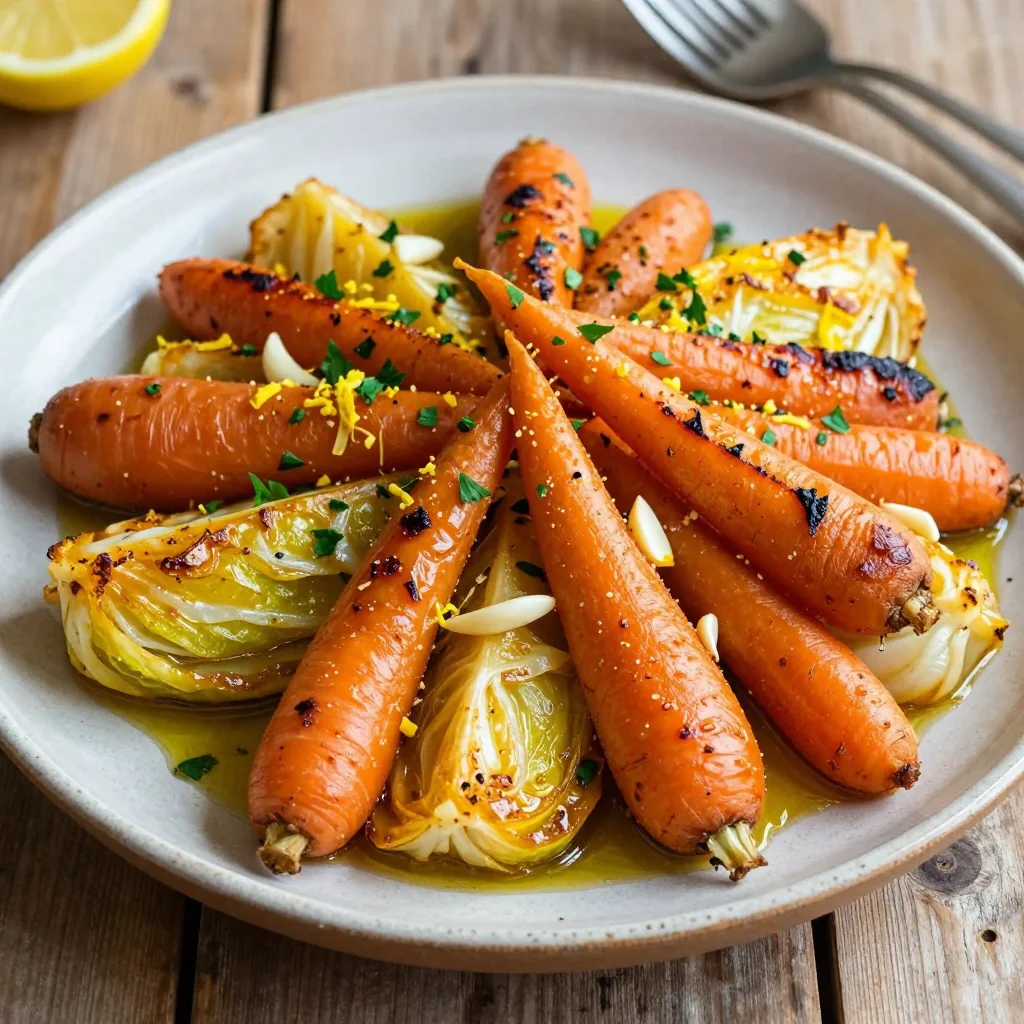
Hearty Lemon Garlic Roasted Cabbage and Carrots for Cozy Family Meals
Ingredients
Instructions
- Preheat and prep: Heat oven to 425°F. Line two baking sheets with parchment.
- Make marinade: Whisk oil, juice of 2 lemons, 6 minced garlic cloves, garlic powder, paprika, salt, and pepper.
- Coat vegetables: Toss carrots in marinade, transfer to one pan. Coat cabbage in remaining marinade.
- Season and zest: Arrange cabbage on second pan, zest 1 lemon over all vegetables, season with more salt and pepper.
- Roast: Bake 25 minutes, flip cabbage and stir carrots. Continue roasting 15-20 minutes until deeply browned.
- Finish and serve: Remove from oven, zest second lemon over top, squeeze juice from half lemon. Rest 5 minutes before serving.
Recipe Notes
Don't skip the two-stage lemon zest—it creates layers of flavor. For meal prep, vegetables keep 5 days refrigerated and reheat beautifully in a hot oven.