Love this? Pin it for later! 📌
I discovered this recipe during a particularly harsh winter when my CSA box kept arriving packed with parsnips. After weeks of soups and mashes, I was desperate for something different. One evening, inspired by a favorite bistro's truffle fries, I decided to treat these ivory roots like their starchy cousins. The result? Pure magic. The natural sweetness of parsnips intensifies in the oven's heat, while the edges turn irresistibly crisp. My family now requests these over traditional French fries, and they've become our go-to comfort food for movie nights and dinner parties alike.
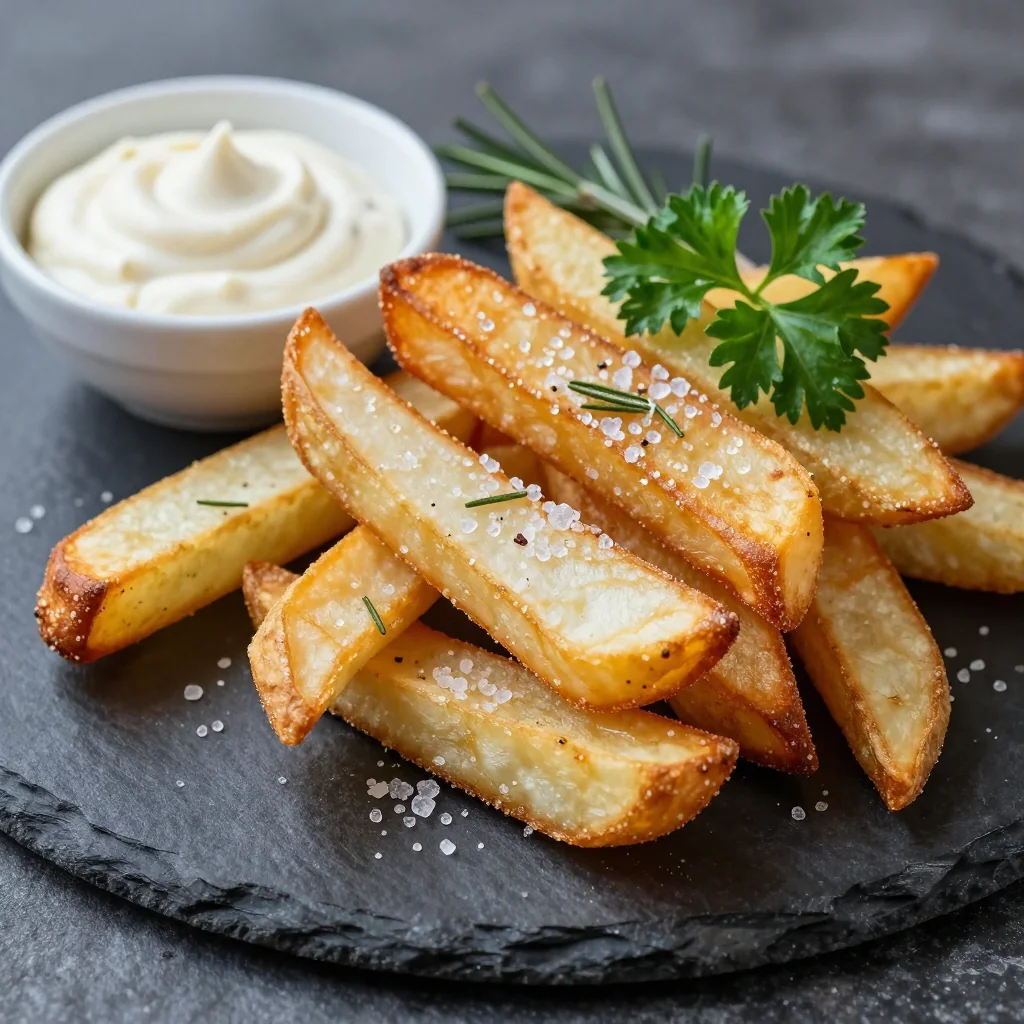
What makes these parsnip fries truly special is the rosemary sea salt—a simple blend that elevates the entire dish. The piney notes of fresh rosemary complement the parsnip's earthy sweetness, while the coarse sea salt provides satisfying crunch and flavor bursts. Whether you're serving these alongside a juicy steak, as part of a vegetarian feast, or simply enjoying them straight from the sheet pan (I won't judge), this recipe delivers restaurant-quality results with minimal effort.
Why This Recipe Works
- Natural Sweetness: Roasting concentrates parsnips' inherent sugars, creating caramelized edges without added sweeteners
- Perfect Texture: Cutting into uniform batons ensures even cooking—crispy outside, creamy inside
- Herb-Infused Oil: Infusing olive oil with rosemary before coating maximizes flavor distribution
- High-Heat Roasting: 425°F temperature creates Maillard reaction for deep, complex flavors
- Single-Pan Method: Everything roasts on one sheet pan for easy cleanup and minimal dishes
- Make-Ahead Friendly: Prep components ahead for stress-free entertaining
- Healthier Alternative: Lower in calories and higher in fiber than traditional fries, with no deep-frying required
Ingredients You'll Need
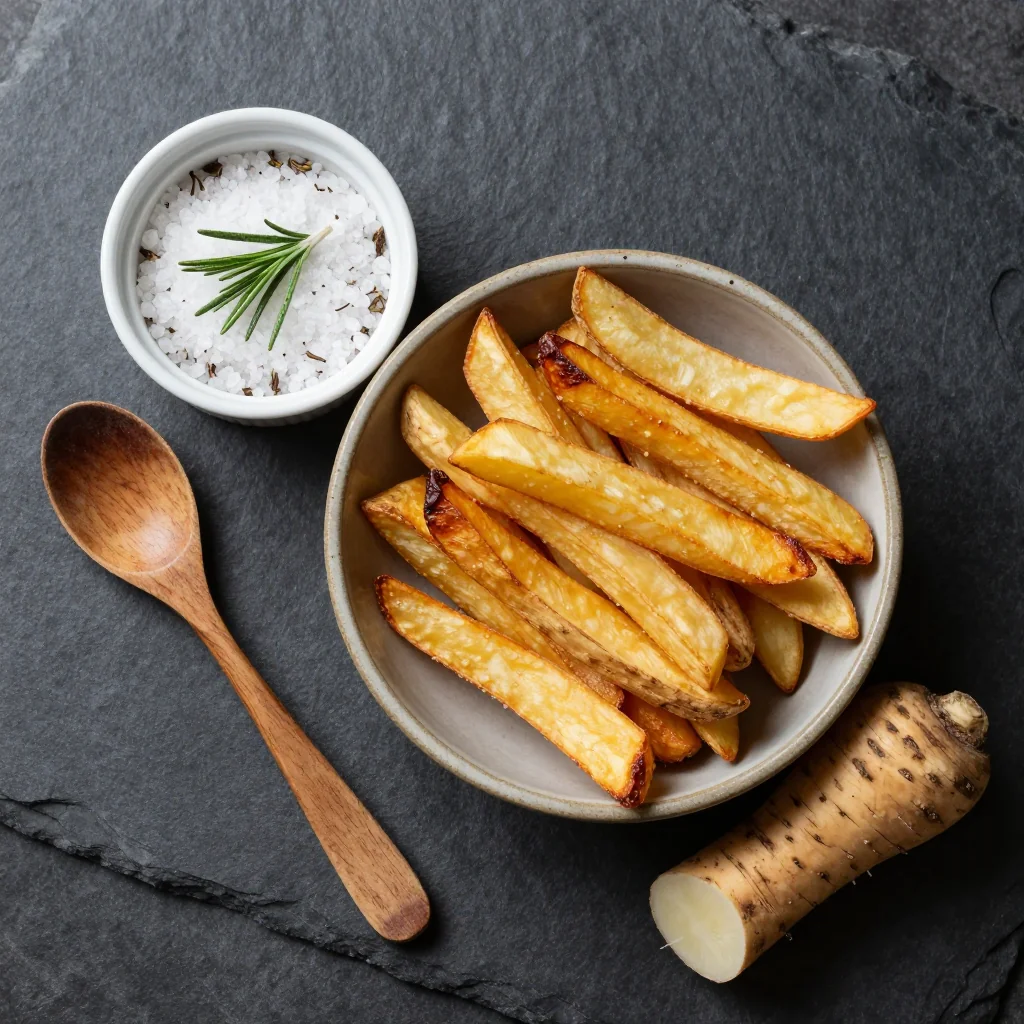
The beauty of this recipe lies in its simplicity—just a handful of carefully selected ingredients that work in perfect harmony. Each component plays a crucial role in creating the ultimate parsnip fry experience.
Parsnips (2 pounds) - Choose firm, medium-sized specimens without soft spots or sprouting eyes. Smaller parsnips tend to be sweeter and less fibrous than their larger counterparts. If you can only find large ones, simply remove the woody core after peeling. The natural sweetness intensifies during roasting, eliminating any need for added sugars.
Fresh Rosemary (3 sprigs) - This aromatic herb is the star seasoning. Fresh rosemary offers a more vibrant, pine-like flavor than dried. When selecting, look for bright green needles without brown spots. The woody stems infuse the oil beautifully, while the needles are finely minced for the finishing salt.
Extra Virgin Olive Oil (3 tablespoons) - Use a good quality oil for the best flavor. The oil not only prevents sticking but helps conduct heat for even browning. If you prefer, avocado oil works as a neutral alternative, though you'll miss the fruity notes that complement the parsnips.
Coarse Sea Salt (1½ teaspoons) - The texture is crucial here. Coarse crystals provide satisfying crunch and burst of salinity. Fleur de sel or Maldon salt are excellent choices. Avoid fine table salt, which can make the fries taste over-salted and doesn't provide the same textural interest.
Freshly Ground Black Pepper (½ teaspoon) - A modest amount enhances the other flavors without competing. Grind it fresh for the most aromatic results. White pepper works in a pinch, though it lacks the same complexity.
Optional: Garlic Powder (¼ teaspoon) - A whisper of garlic powder adds depth without overwhelming the delicate parsnip flavor. Fresh garlic can burn at high heat, so powder is preferred here.
How to Make Roasted Parsnip Fries with Rosemary Sea Salt
Prepare the Rosemary Salt
Strip the rosemary leaves from two sprigs, reserving the third for garnish. Finely mince the leaves until you have about 2 tablespoons. Combine with the coarse sea salt in a small bowl, crushing the mixture with your fingers to release the oils. This step can be done up to a week ahead—store in an airtight container at room temperature.
Preheat and Prep
Position a rack in the center of your oven and preheat to 425°F (220°C). This high temperature is crucial for achieving caramelization. Line a large rimmed baking sheet with parchment paper for easy cleanup. If your sheet pan tends to warp, place it in the oven while preheating to prevent warping when the cold vegetables hit the hot surface.
Prep the Parsnips
Peel the parsnips using a vegetable peeler, removing any blemishes. Cut into 3-inch lengths, then slice lengthwise into ½-inch batons. Try to keep them uniform for even cooking—think steak fry dimensions rather than shoestring. If your parsnips have a woody core (common in larger specimens), cut it out with a paring knife. This tough center won't soften during roasting.
Infuse the Oil
In a small saucepan, gently warm the olive oil with the remaining rosemary sprig over low heat for 5 minutes. You want the oil to shimmer slightly but never smoke. Remove from heat and let steep for 10 minutes. This infuses the oil with rosemary essence without the risk of burnt herbs. Discard the rosemary sprig before using.
Season Generously
Toss the parsnip batons in a large bowl with the infused olive oil, ensuring each piece is well-coated. Add the black pepper and garlic powder if using, tossing again. The key here is not to overcrowd—work in batches if necessary. Overcrowding leads to steaming rather than roasting.
Arrange for Success
Spread the parsnips in a single layer on the prepared baking sheet, leaving space between each fry. Use two sheets if necessary—crowding is the enemy of crispiness. Position them so the cut sides are facing down for maximum caramelization. This contact with the hot pan creates those coveted golden-brown spots.
Roast to Perfection
Slide the pan into the preheated oven and roast for 20 minutes. The high heat will start the caramelization process. After 20 minutes, use a thin spatula to flip each fry, taking care not to break them. Return to the oven for another 15-20 minutes, until golden brown and crispy at the edges. The total time depends on your oven and the thickness of your fries.
Finish and Serve
Remove from the oven and immediately transfer to a serving platter. While still hot, sprinkle with ¾ of the rosemary sea salt, reserving the rest for serving. The residual heat helps the salt adhere better. Garnish with a few fresh rosemary leaves for visual appeal. Serve hot with your favorite dipping sauce or enjoy them naked—the flavor is that good.
Expert Tips
Temperature Matters
Don't be tempted to lower the temperature for faster cooking. The high heat is essential for caramelization. If your fries are browning too quickly, move the rack lower rather than reducing temperature.
Dry Equals Crispy
Pat your parsnips dry after peeling and cutting. Excess moisture creates steam, preventing proper browning. If prepping ahead, store cut parsnips in paper towel-lined containers.
Flip Carefully
Use a thin metal spatula for flipping. Thicker tools can break the delicate fries. If some stick to the pan, let them roast a bit longer—they'll release naturally when ready.
Make-Ahead Magic
Prep everything up to 4 hours ahead. Store cut parsnips submerged in cold water with a squeeze of lemon to prevent browning. Drain and pat dry before proceeding with the recipe.
Size Consistency
Invest in a mandoline for perfectly uniform fries. Consistent sizing ensures even cooking—no more burnt ends and raw centers. The ½-inch thickness is the sweet spot for crispy edges and creamy centers.
Color Equals Flavor
Don't pull them too early! Those deeply caramelized spots pack the most flavor. Wait until at least 30% of each fry shows golden-brown color before removing from the oven.
Variations to Try
Spicy Maple
Replace rosemary with 1 tsp smoked paprika and ¼ tsp cayenne. Drizzle with 2 tbsp maple syrup during the last 5 minutes of roasting for a sweet-heat sensation.
Parmesan Truffle
Omit rosemary salt. Instead, toss hot fries with ¼ cup grated Parmesan and 1 tsp white truffle oil. Finish with cracked black pepper and serve immediately.
Everything Bagel
Replace rosemary salt with 2 tbsp everything bagel seasoning. The garlic, onion, and sesame seeds create an addictive flavor profile that pairs beautifully with parsnips.
Lemon Herb
Add the zest of one lemon to the oil infusion. After roasting, toss with minced parsley, chives, and a squeeze of fresh lemon juice for brightness.
Curried Coconut
Replace olive oil with coconut oil and add 1 tsp curry powder. The tropical notes complement parsnips' sweetness beautifully, especially when served with mango chutney.
Balsamic Glaze
Drizzle with 3 tbsp balsamic reduction during the last 10 minutes of roasting. The tangy-sweet glaze creates a sticky, crave-worthy coating.
Storage Tips
Refrigeration Guidelines
Store leftover fries in an airtight container in the refrigerator for up to 4 days. Line the container with paper towels to absorb excess moisture. While they'll lose some crispness, they reheat beautifully in a 400°F oven for 8-10 minutes. Avoid microwaving, which creates soggy fries.
Freezing Instructions
These fries freeze exceptionally well for up to 2 months. Arrange cooled fries in a single layer on a parchment-lined sheet pan and freeze until solid. Transfer to freezer bags, removing as much air as possible. Reheat directly from frozen in a 425°F oven for 15-18 minutes, no thawing needed.
Make-Ahead Components
Prep the rosemary salt up to 2 weeks ahead and store in an airtight container. Cut parsnips can be stored in cold water for 24 hours—just drain and dry thoroughly before roasting. The infused oil keeps for 1 week refrigerated, bringing its aromatic magic to other dishes too.
Frequently Asked Questions
While fresh rosemary delivers superior flavor, you can substitute dried in a pinch. Use only 1 teaspoon of dried rosemary, crushed between your fingers to release oils. The flavor will be less vibrant but still delicious. Consider adding ½ teaspoon dried rosemary to the oil during infusion for stronger herb presence.
Soggy fries usually result from overcrowding the pan or insufficient heat. Ensure your oven is fully preheated and don't crowd the fries—use two pans if needed. Also, pat the parsnips dry before oiling, and avoid flipping too early. Let them develop a crust before attempting to turn.
Absolutely! Air frying produces excellent results. Preheat your air fryer to 400°F. Work in batches, arranging fries in a single layer. Cook for 12-15 minutes, shaking halfway through. The circulating air creates beautifully crispy exteriors while maintaining creamy centers. You may need to reduce the oil to 2 tablespoons total.
These versatile fries complement many flavors. Try garlic aioli, lemon-herb yogurt sauce, honey-mustard, or spicy ketchup. For something special, blend ½ cup Greek yogurt with 2 tbsp tahini, lemon juice, and minced garlic. The rosemary also pairs beautifully with cranberry chutney or fig jam for a sweet-savory combination.
These scale beautifully for parties! Prep everything ahead, storing cut parsnips in water. Use multiple sheet pans and rotate positions halfway through roasting. Keep finished batches warm in a 200°F oven on wire racks set over sheet pans. This prevents sogginess while you finish roasting remaining batches.
Parsnip fries offer several nutritional advantages: fewer calories, more fiber per serving, and a lower glycemic index. They're rich in vitamin C, folate, and potassium. While both vegetables have merit, parsnips provide more nutrients per calorie. Plus, roasting requires significantly less oil than deep-frying, making these a lighter choice overall.
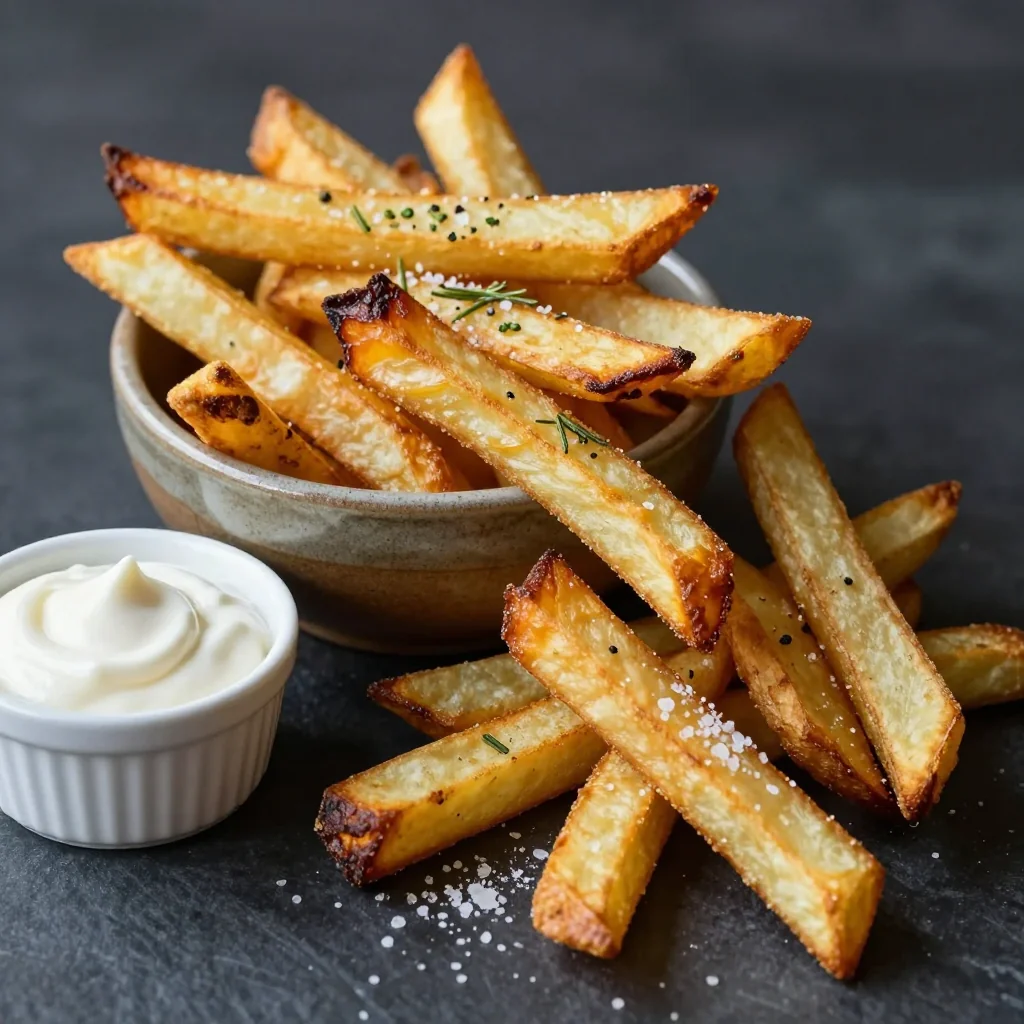
Roasted Parsnip Fries with Rosemary Sea Salt
Ingredients
Instructions
- Infuse oil: Gently warm olive oil with 1 rosemary sprig for 5 minutes. Let steep 10 minutes, then discard sprig.
- Make rosemary salt: Mince leaves from 1 rosemary sprig, mix with sea salt, crushing to release oils.
- Preheat oven: Set to 425°F (220°C). Line a large rimmed baking sheet with parchment.
- Season parsnips: Toss parsnip batons with infused oil, pepper, and garlic powder until well-coated.
- Arrange on pan: Spread in single layer, cut sides down, leaving space between each fry.
- Roast: Bake 20 minutes, flip each fry, then roast another 15-20 minutes until golden-brown.
- Finish: Transfer to serving platter, sprinkle with ¾ of rosemary salt while hot. Garnish with remaining rosemary.
Recipe Notes
For best results, don't overcrowd the pan—use two sheets if needed. Store leftovers refrigerated for 4 days or frozen for 2 months. Reheat in a 400°F oven for 8-10 minutes to restore crispness.