Love this? Pin it for later! 📌
Why This Recipe Works
- One-Pan Wonder: Everything roasts together—no skillet-shuffling or pot-watching.
- Speedy: From fridge to table in under 30 minutes.
- Customizable: Swap veggies, change up the glaze, or adjust spice levels effortlessly.
- Meal-Prep Friendly: Portion, refrigerate, and reheat without drying out.
- Heart-Healthy: Omega-3-rich salmon plus fiber-packed asparagus equals nutrition goals met.
- Zero Baby-Sitting: The oven does the work while you pour yourself a glass of something nice.
- Scalable: Halve it for date night or double it for Sunday lunch with the in-laws.
Ingredients You'll Need
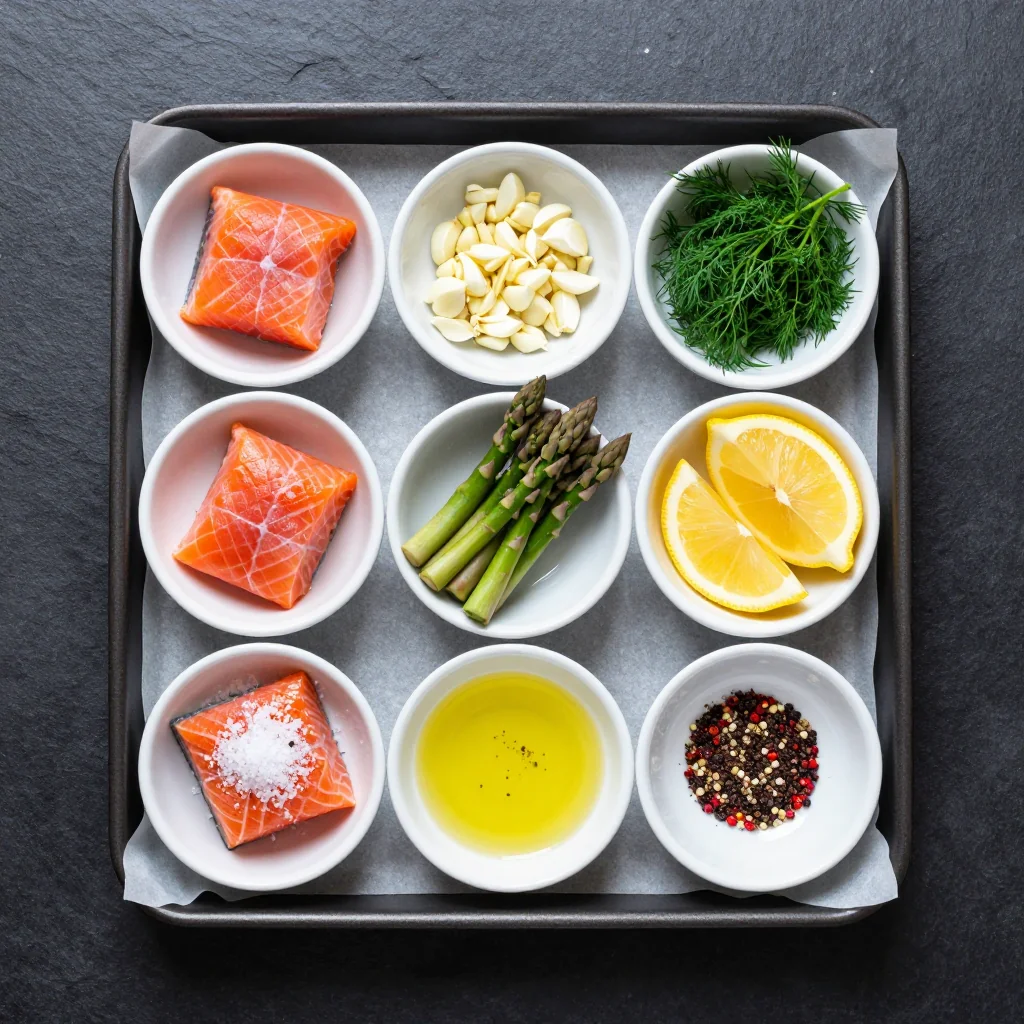
Great recipes start with great ingredients, but they don’t have to be fussy. Here’s what to grab, why it matters, and the easy swaps that keep dinner on track when the market runs out of your first choice.
Salmon – Four skin-on center-cut fillets, 5–6 oz each and about 1-inch thick. Skin protects the flesh from the blazing pan, keeping the center moist. Look for vibrant, translucent flesh that smells of the sea, not fishy. Wild-caught Coho or King if you’re splurging; responsibly farmed Atlantic if the budget is tight. Remove pin-bones with tweezers, or ask the fishmonger to do it—most are happy to.
Asparagus – One pound of the fattest spears you can find; they stay snappy under high heat. Thin spears are lovely for sautéing but shrivel in a 425 °F oven. To prep, simply snap the woody ends—nature shows you exactly where to break.
Olive Oil – Two tablespoons of the everyday extra-virgin kind. It coats vegetables, encourages browning, and carries fat-soluble flavors. In a pinch, avocado oil or melted ghee works.
Garlic – Three fresh cloves, micro-planed. Jarred is acceptable in the zombie-apocalypse version of this recipe, but fresh takes thirty seconds and pays flavor dividends.
Lemon – Zest plus juice. The zest’s oils perfume the glaze; the juice brightens everything. Organic if possible—citrus peels carry more residue than we like to think about.
Dijon Mustard – One tablespoon for gentle heat and emulsifying magic. Whole-grain mustard gives a rustic look; yellow ball-park mustard is too harsh.
Pure Maple Syrup – One tablespoon for caramelized edges and subtle sweetness. Honey works, but it browns faster, so watch closely in the last minutes.
Soy Sauce – Two teaspoons low-sodium for umami depth. Tamari keeps it gluten-free; coconut aminos lighten the salt.
Fresh Thyme – A teaspoon of leaves, optional but delightful. Woody herbs hold up in the oven; basil or cilantro would burn.
Crushed Red Pepper Flakes – A pinch for background warmth; scale to taste.
Kosher Salt & Black Pepper – The non-negotiables that wake up every other flavor.
How to Make Easy Sheet Pan Salmon and Asparagus for a Quick Dinner
Preheat & Prep Pan
Position rack in center of oven and preheat to 425 °F (220 °C). Line a rimmed 11 × 17-inch sheet pan with parchment for zero sticking or scrubbing. If your pan is smaller, crowd politely—overlapping asparagus is fine, but give salmon fillets breathing room so steam doesn’t sabotage sear.
Whisk the Glaze
In a small bowl, combine olive oil, Dijon, maple syrup, soy sauce, lemon zest, lemon juice, garlic, thyme, and red-pepper flakes. Whisk until silky; set aside half in a separate cup for serving. This prevents cross-contamination from raw fish and gives you a bright finishing drizzle.
Season the Asparagus
Pat asparagus dry; water is the enemy of char. Spread spears on one side of the pan, drizzle with one tablespoon of the glaze, and toss to coat. Arrange so tips face the pan’s center—the narrow tips cook faster than the stalks, and you want them farther from the hot edge.
Pat & Position Salmon
Blot fillets very dry with paper towels; moisture on protein equals a pale, steamed exterior. Place skin-side down among the asparagus. Brush remaining glaze generously over the top and sides of each fillet, allowing it to pool slightly on the pan—that puddle will caramelize into sticky deliciousness.
Season Simply
Sprinkle everything with ¾ teaspoon kosher salt and ½ teaspoon freshly ground black pepper. Salt draws moisture outward in the first minutes, then reabsorbs, so don’t panic if the surface looks damp—trust the process.
Roast to Perfection
Slide the pan into the oven and roast for 12 minutes. Rotate pan front-to-back for even browning; roast another 3–5 minutes. Salmon is ready when it flakes under gentle fork pressure but still has a faint blush inside (135 °F on an instant-read thermometer). Asparagus should be crisp-tender with charred tips. If you like salmon more well-done, give it an extra 2 minutes, but remember carry-over cooking will add another 5 degrees as it rests.
Rest & Re-Glaze
Transfer salmon to a platter; tent loosely with foil and rest five minutes so juices reabsorb. While resting, drizzle a spoonful of the reserved (uncooked) glaze over each fillet for fresh sheen and zing.
Serve & Savor
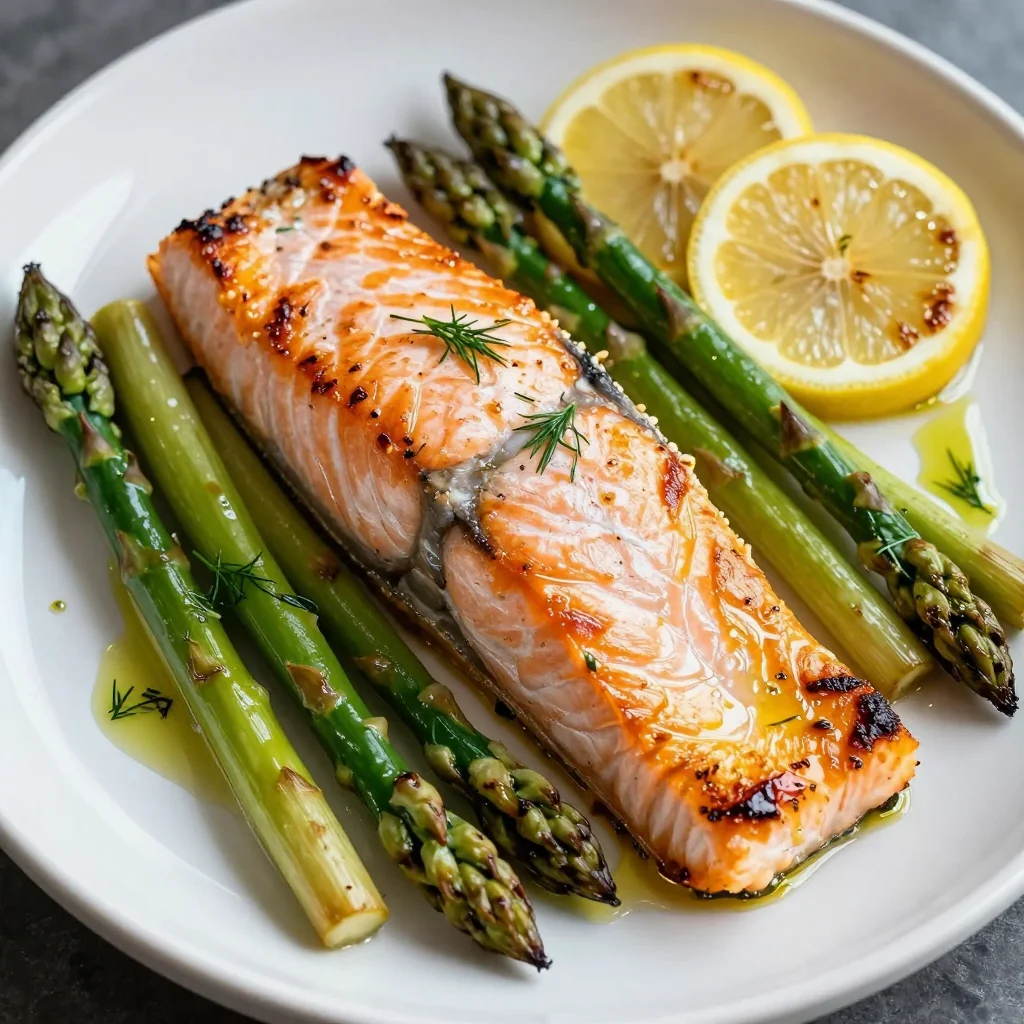
Plate salmon alongside asparagus, scatter with optional lemon wedges and fresh thyme leaves. Pair with a crisp white wine like Sauvignon Blanc or, for non-drinkers, sparkling water with a squeeze of the remaining lemon. Dinner is served—and the pan cleans itself after a ten-minute soak.
Expert Tips
Hot Oven, Cold Fish
Starting salmon slightly chilled helps the glaze set before melting off, creating that lacquered top.
Dry = Brown
Pat vegetables and protein relentlessly. Moisture is the arch-enemy of Maillard browning.
Check Early
All ovens lie. Start peeking at the 10-minute mark; salmon goes from perfect to parched quickly.
Even Sizes
Buy fillets of equal thickness or fold skinny tails underneath so everything finishes together.
Reserve Some Glaze
Never brush cooked food with anything that touched raw seafood—food-safety 101.
Rest, Don’t Rush
A brief rest relaxes proteins, letting juices redistribute so every bite is buttery, not chalky.
Variations to Try
- Asian Twist: Swap maple for 1 Tbsp hoisin, add 1 tsp grated ginger, finish with toasted sesame seeds and scallions.
- Mediterranean Mood: Replace Dijon with red-pepper hummus, add olives and cherry tomatoes to the pan, sprinkle with feta after roasting.
- Spicy Cajun: Season salmon with 1 tsp Cajun spice plus the glaze, toss asparagus with andouille slices, serve over dirty-rice.
- Green Veg Swap: Broccolini or haricots verts sub in seamlessly; just add 2 extra minutes for sturdy broccolini stalks.
- Citrus Swap: Orange + fresh rosemary instead of lemon + thyme feels positively alpine.
Storage Tips
Refrigerate: Cool leftovers within two hours, transfer to airtight container, refrigerate up to 3 days. For best texture, store salmon and asparagus separately; the veg continue to release moisture.
Reheat: Place salmon skin-side down in a skillet with a splash of water, cover, and warm over medium-low 4 min; asparagus can be flash-sautéed in the same pan. Microwave works in 30-second bursts, but the edges toughen.
Freeze: Freeze cooked salmon fillets on a parchment-lined tray until solid, then wrap individually and keep up to 2 months. Thaw overnight in refrigerator and reheat gently. Note: asparagus texture suffers after freezing—fresh is best.
Make-Ahead: Whisk glaze up to 5 days ahead and refrigerate; bring to room temp before brushing so olive oil isn’t congealed. You can also trim asparagus and store upright in a jar with an inch of water like flowers; they stay perky for nearly a week.
Frequently Asked Questions
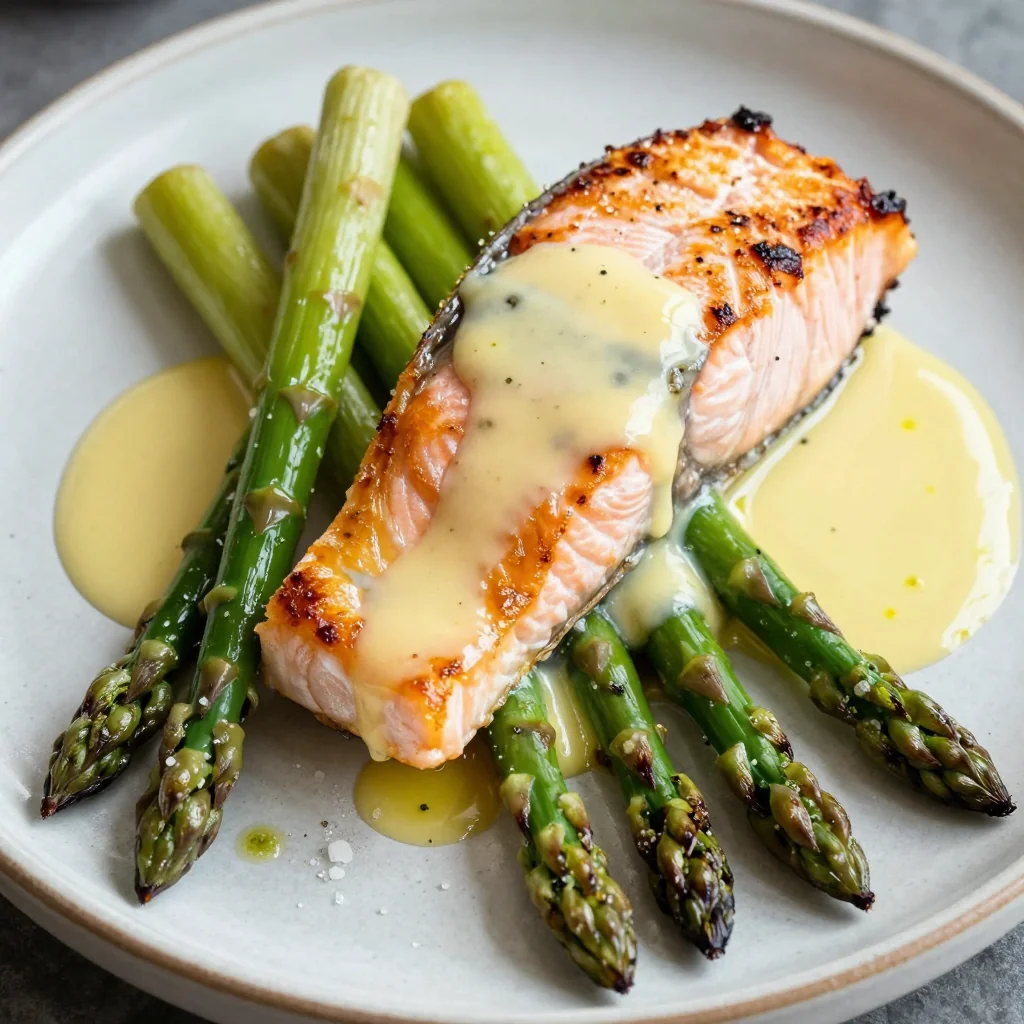
Easy Sheet Pan Salmon and Asparagus for a Quick Dinner
Ingredients
Instructions
- Preheat: Set oven to 425 °F. Line sheet pan with parchment.
- Make Glaze: Whisk oil, Dijon, maple, soy, lemon zest & juice, garlic, thyme, pepper flakes. Reserve half.
- Season Veg: Toss asparagus with 1 Tbsp glaze on one side of pan.
- Add Salmon: Place fillets skin-down; brush tops with remaining glaze, season with salt & pepper.
- Roast: Bake 15 min (12 + 3) until salmon flakes and asparagus is tender-crisp.
- Rest & Drizzle: Tent loosely 5 min, then spoon reserved glaze over fish before serving.
Recipe Notes
For crispy skin, slide the fillets onto the pan skin-side down and do not flip during roasting. Dry fillets thoroughly for best caramelization.